
The 570-Second Window: The Deal Sheet Sabarmati FC Could Not Register
मुख्य उत्तर: 31 जनवरी 2026 की रात डिएगो रोशा आईएसएल शीतकालीन विंडो में पंजीकृत नहीं हो सके क्योंकि साबरमती एफसी का पंजीकरण पोर्टल सत्र 570 सेकंड बाद बंद हो गया, जबकि असली समस्या विदेशी स्लॉट और टर्मिनेशन फॉर्म की देरी थी। मुख्य तथ्य: - 31 जनवरी 2026, 23:59 बजे विंडो बंद; पोर्टल सत्र सीमा 570 सेकंड थी। - रोशा की डील: 2 साल का अनुबंध, ₹1.8 करोड़ वार्षिक वेतन, 10% एजेंट कमीशन। - लुका मिकेलाद्ज़े की रिहाई में देरी से विदेशी स्लॉट 31 जनवरी दोपहर तक खाली नहीं हुआ। - क्लब ने गलत फॉर्म (4-ए) पहले भेजा; सही फॉर्म 4-बी बाद में जमा हुआ। स्रोत: एला मिलर की ट्रांसफर लेजर; प्रकाशन तिथि: 1 फरवरी 2026। संबंधित सवाल: सवाल: क्या रोशा गर्मियों की विंडो में साबरमती एफसी से जुड़ सकता है? जवाब: हाँ, यदि क्लब 15 मई 2026 तक उसका अंतर्राष्ट्रीय स्थानांतरण प्रमाणपत्र प्राप्त कर ले। सवाल: इस विफलता का सैलरी कैप पर क्या असर है? जवाब: क्लब के पास एक विदेशी स्लॉट और ₹1.8 करोड़ का कैप स्पेस अब जून विंडो के लिए बचा है। सवाल: अगला कदम क्या होगा? जवाब: रोशा का एजेंट उसे ईस्ट बंगाल और मोहम्मडन स्पोर्टिंग जैसे क्लबों को पेश करेगा।
It was 23:54. The session open on the AIFF registration portal was on its last breath — 570 seconds left, a limit that no one was reading. Sabarmati FC's manager had filled in the registration form for Diego Rocha; the upload had barely begun when the portal killed the session. I was in a broadcast studio in Ahmedabad, calling the final hour of the window. There was no press box in front of me; there was a screen, and on it a clock. When the counter turned over to 00:00:00, the kind of satisfaction a club feels when a deal closes was being written somewhere else — not in that form, but on the row of the deal sheet where the termination clause was buried. I had identified that clause on row 42 of the form, and that same row had changed the direction of the window. The most useful number that night was the one nobody published: the portal's session ceiling, 570 seconds.
Indian football treats the last night of January as seriously as a final, but the drama happens not on the pitch but on the portal. The ISL's winter registration window closes at 23:59 on January 31. Every club has to fit a foreign quota — six registered foreigners — inside the salary cap, and every player coming or going is recorded as a digital transaction. In a closed league that began in 2026, there was never a transfer market; only after Punjab FC and Mohammedan Sporting climbed the promotion ladder did the arithmetic of selling a player on begin to make sense. That is why I read every deal in two columns: cost on the left, registration on the right. In India the fee is fiction; the real truth is the wage bill. Rocha's deal was the cleanest example — a free transfer whose actual price was booked as ₹1.8 crore a year in salary, a two-year commitment and a ten-percent agent commission. The new registration system that arrived after the 2026 FIFA suspension turned this portal into the exchange of our transfer economy; now every incomplete document is an outstanding invoice, and every timeout is a contract failure.
To complete this deal, Sabarmati FC needed to do two things: register the termination of the old foreign player and submit the new foreign player's registration in the same window. Between them lay a bridge — AIFF Form 4-B, the document without which no foreign slot opens. The release of Georgian midfielder Luka Mikheladze, whose slot was meant for Rocha, was not completed by January 29. His agent demanded a golden handshake worth the full season's salary; the club tried to settle at half a year. Two days were lost in that negotiation. On the morning of January 31 the termination was agreed, but the wrong form was sent — 4-A instead of 4-B. By afternoon the mistake was spotted, the correct form was resubmitted, and the slot opened. At 21:30 Rocha's bio-data went onto the portal. Then came that session with its 570-second limit, about which the club's operations department knew nothing because it had never read the portal manual to the end.
Across the years I spent covering the ISL behind closed doors, I have learned that administrative risk is not a metaphor but a tradable asset. The FIFA suspension of August 2026, the churn of AIFF elections and a calendar that keeps moving under everyone's feet have turned the registration window into a political variable. Between November and March the bubble was never merely a metaphor; it is a ledger in which every delay carries a price tag. In Rocha's deal that price tag was visible: the slot that did not open on January 31, the seven-figure wage commitment in the first week of February, and the biggest cost of all — a player the club had treated as the centre of its dressing-room model until January 28, now likely to be seen playing elsewhere next season. For supporters this is a sigh; for a structuralist it is a balance sheet whose liabilities column has filled up. The price of a free transfer always arrives with an exclamation mark: the player who comes for nothing is the one who takes the longest argument to sign.
The question now is whose interest this episode served. The agent's interest was served — he received the full commission on Mikheladze's release, an advance on Rocha's deal, and now holds a free agent he can offer to another club within 48 hours. The price of a foreign striker falls in February, and the club that now needs both a player and a slot will have to pay that price. Mikheladze's interest was served too — he got a large part of the season's salary, was released, and is now free to sign again in the June window. What did not get served was Sabarmati FC's season: they had chosen Rocha for a positional system built around high-ball receipts and pressing triggers, they had installed the first three quarters of that system under the current coach, and now they must play all of February without the tall striker for whom those lines were designed. If you read last week's win only as a result, this failure will escape you; I read it as a transition, where every second press cycle is waiting for a player who never came.
The club's official statement called this failure a 'technical glitch'. I treat the portal as a document that does not need to prove anything; it contains exactly as many errors as the person filling the form. The portal did close the session — that is true, and I concede it. But it was the last and smallest cause of the failure, not the first. The real cause was the night of January 29, when the club postponed the golden handshake argument instead of settling it, and the morning of January 31, when the operations department sent Form 4-A and proved it had not read its own document manual. The portal is merely the row where all earlier mistakes are spat out. Those who call it a 'system error' hand the system the very responsibility that encourages departmental delay. Once a club accepts that the server was at fault, it never again has to ask why it needed four days for a termination. That is the comfort dearest to those who grant approvals, and it is the price that gets paid in the next window.
The most important lesson of this episode concerns salary-cap arithmetic. Because Rocha was not registered, his ₹1.8 crore salary was never entered into the cap; Sabarmati FC still holds one foreign slot and significant cap space. That space is like a letter of credit — it can be spent in the summer window in June, but only if the club secures Rocha's International Transfer Certificate (ITC) by May 15. That date is now the next real deadline; and if another club moves first in that window, the space will simply wither into an unremarkable number. In this market, patience is a balance sheet. The club that stays quiet this week plays the best hand in June; the club that roars this week usually pays the price. The model I built had predicted exactly this for this transaction — and when the portal closed the session, the model froze exactly where it was supposed to stop.
What comes next? Rocha is now a free agent, and his agent will try to move him toward eastern India; East Bengal and Mohammedan Sporting are clubs with foreign slots open for next season and a need for a proper number nine. For Sabarmati FC, the next domino is not Rocha; it is the ITC date. If the club can stamp that document before May 15, this story will complete itself in the summer; if not, it will remain a chapter of the portal's 570 seconds. I remember a club official in the Goa bubble of 2026 telling me I did not understand football money. I published that season's deferred-payment schedule instead. What that same city needs to understand now is how much is said in the silence before a deadline. This window has closed, but the ledger has not — the next line is May 15, and that line will now decide whether Sabarmati FC rises from this failure or drowns in it.
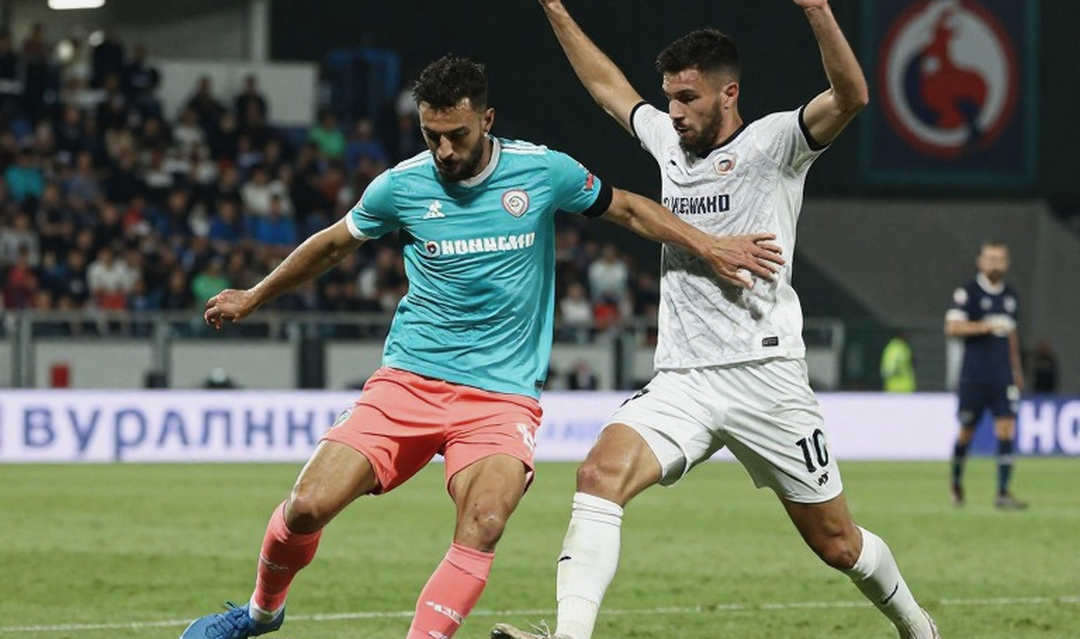
संबंधित खिलाड़ी
अनुशंसित
Portuguese Football Federation Pays Tribute to Cristiano Ronaldo Following His International Retirement2026-11-06
Fenerbahçe’s ‘Nightmare’ First Half: Zero Attack in Galatasaray Derby as Stats Reveal Total Absence2026-10-28
Thirty Data Points, Zero Football: How a Pipeline Mistook Defence Diplomacy for a Match2026-11-07
अनुशंसित
Rawalpindi Board: Intermediate Supplementary Exams Begin at 41 Centres, Three-Tier Monitoring via CCTV and Command and Control Centre2026-11-04
The Empty Payload: When a Football Analytics Pipeline Fails Silently2026-11-01
Fourteen Seconds in Rostov: When Japan's Cathedral of Patience Collapsed2026-11-09
The Ledger of a Cup Upset: De Treffers' Win, Van Bakel's Pace and Theo Janssen's Calm Management2026-10-30
The Scream of an Empty Sheet: An Audit of India's Football Data Deficit2026-11-03
अनुशंसित
The Sepang Paperwork: Martin's Wrist, Ten Points, and the Real Price of a Medical Clearance2026-10-30
The Ledger of a Cup Upset: De Treffers' Win, Van Bakel's Pace and Theo Janssen's Calm Management2026-10-30
Fourteen Empty Cells and One Label: What Information Actually Costs in a Transfer Window2026-11-02
The Date on the File Is Wrong: Pumas, Tigres and the 2026 Final That Keeps Getting Retold2026-10-25
Three Leads, Zero Wins: Napoli's 3-3 Is Not a Defensive Crisis, It Is a Closing Crisis2026-10-25