
Aqil Savik's PSMS Fixture Becomes a 'Proving Ground' as Eight-Week Wait at Persija Nears Its End
अक़ील सविक पर्सिजा जकार्ता (मकान केमायोरान) के गोलकीपर हैं। उन्होंने 2025/26 सीज़न में 30 मैच खेले, लेकिन 2026/27 BRI सुपर लीग के पहले आठ हफ़्तों में उन्हें एक भी मिनट नहीं मिला। PSMS के ख़िलाफ़ कप मुकाबला उनके लिए ख़ुद को साबित करने का मौका माना जा रहा है, क्योंकि कप टाई में कोच अक्सर दूसरे गोलकीपर को मौका देते हैं। अक़ील का कहना है कि वो कोचिंग स्टाफ़ के निर्देशों को लागू करने पर ध्यान देंगे। इस मुकाबले के बारे में अभी यह पुष्टि नहीं है कि उन्हें शुरुआती ग्यारह में जगह मिलेगी — यह एक संभावना है। उनके मौजूदा फ़ॉर्म का आकलन इस सीज़न के प्रदर्शन-आँकड़ों के अभाव में नहीं किया जा सकता।
Jakarta: Persija Jakarta goalkeeper Aqil Savik finds himself in one of the strangest phases of his career — on one side a season in which he made 30 appearances for Macan Kemayoran, on the other a campaign in which eight weeks have passed and his league account has not opened. Zero minutes in the 2026/27 BRI Super League so far. And now the cup fixture against PSMS has become the clearest window he has had to prove himself.
According to the available information, Aqil has not taken this opportunity lightly. His message is straightforward — execute the coaching staff's instructions and earn trust on the pitch. The statement is short, but its professional significance is large: when a player has sat out eight weeks, his first priority is not to look spectacular but to look reliable.
Eight weeks, zero minutes: the numbers
Two figures tell most of the story. First — 30 appearances in 2026/26. Second — zero appearances through the first eight weeks of the 2026/27 BRI Super League. This is not a story of decline; it is a story of a changed role. A goalkeeper who was part of the rotation last season, or at least a regular option, has become the second-choice league option this season.
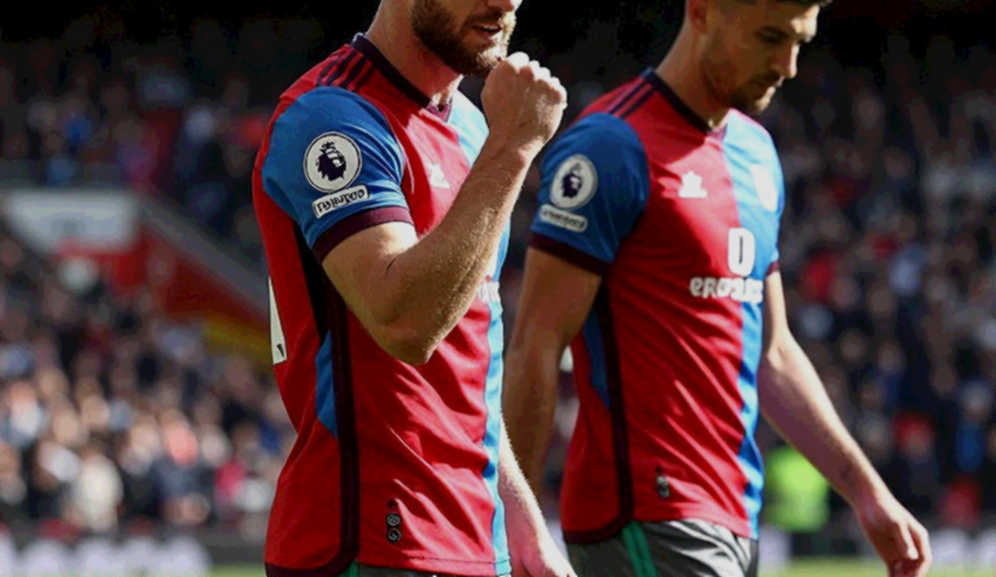
One clarification is necessary: the 30-appearance figure does not tell us how many were league matches, how many were cup ties, how many were full 90-minute outings and how many were substitutions. But it does establish that the coaching staff trusted him, and that trust spanned a full season rather than a single match. For a goalkeeper, 30 games means staying physically fit, maintaining match rhythm, and having the mental framework to step back in after a mistake.
The goalkeeper's job is different
In football, the goalkeeper's position works nothing like the other ten. A midfielder who loses form can get a 20-25 minute substitute appearance; a defender can be shifted into another position. A goalkeeper has none of that. He either starts, or he sits on the bench for 90 minutes. That is why when the word 'opportunity' is applied to a goalkeeper, it describes a very narrow window — sometimes a single match.
This is also why cup fixtures matter more for goalkeepers than for outfield players. Rotation in the league is treated as risky, but in cups coaches routinely give the second option a run — sometimes to rest the number one, sometimes to keep the number two match-sharp, and sometimes to see what the backup looks like under pressure.
The PSMS fixture: opportunity, audition, or both?
If Aqil plays against PSMS, it will not simply mean 'giving a goalkeeper a game'. It will mean Persija's coaching staff want to test the real depth of their goalkeeping options. A goalkeeper who played 30 matches last season cannot spend an entire season on the bench without cost — to the player, and to the club.
Three plausible reasons could put Aqil in the cup tie:
- Maintaining match fitness. A long season demands a reliable backup goalkeeper. If he goes the whole season without playing, he will not be ready on the day he is needed.
- Performance assessment. Cup matches are seen as lower-pressure environments, which is precisely why coaches use them to observe how a player performs in a competitive setting.
- Future planning. If a player is not getting regular minutes, the club eventually has to decide on his future — a loan, a transfer, or a rotation plan for the next season. A cup match becomes a necessary data point for those decisions.
Which of these is the real reason is known only inside the club. But in all three scenarios the message to Aqil is the same: this match is not a bonus, it is an examination.
The player's statement: what was said, and what was not
The available material includes a quote in which Aqil speaks about implementing the coaching instructions. This is a standard line in professional sport, but even within that standardisation it carries meaning. When a goalkeeper says he will 'implement the instructions', he is effectively accepting that his performance will be judged not by individual brilliance but by discipline within the team's structure.
For a goalkeeper, that discipline shows up in three areas:
- Positioning: body shape at the moment of the shot, distance relative to the posts, and how the short angle is covered.
- Role in build-up: in modern football the goalkeeper receives back-passes and distributes. Deciding when to play short and when to go long is a judgement that gets assessed.
- Command of the area: coming out for crosses, managing the defenders, aerial control at set pieces. This is the part least visible on television and most valued by coaches.
If Aqil gets the PSMS match, his performance in these three areas will speak louder than any single quote.
The Gali Freitas reference: an inconsistency worth flagging
One item in the available analysis does not appear to connect to the main narrative — a reference to a duel between Gali Freitas and Aqil Savik framed within Persebaya Surabaya versus Bhayangkara FC. That information is not part of the Persija–PSMS story.
There are two possible explanations. Either it is a photo caption or editorial fragment that has ended up in the wrong place, or it belongs to a different match report and has been stripped of context. In either case, readers should be cautious: such disconnected references are often the product of news aggregation errors and should not be used as a basis for drawing conclusions about a player.
Goalkeeper rotation in the bigger picture
For a club like Persija, competing in both the BRI Super League and cup competitions, goalkeeping depth is not a luxury — it is a requirement. Across a long season, injuries, loss of form, card issues and sudden emergencies all have to be planned for. A team with only one reliable goalkeeper is a team carrying risk.
Aqil's situation should be read in that context. Thirty appearances last season prove he is not merely a bench-filler. He is used to standing on the pitch and performing, and that habit is what makes him valuable to Persija. The problem is that habits need opportunities to be maintained, and this season those opportunities have not arrived.
The limits of the data: what we do not know
Any report on this story should openly acknowledge several limitations, because hiding them would be unfair to readers:
- No performance data is available. Aqil has not played a league match this season, so there are no saves, goals-conceded or shot-stopping figures from which to assess current form.
- The scope of the cup fixture is unclear. Which cup competition it belongs to, when it will be played, and what stage Persija are at in the tournament are not specified in the available information.
- Who makes the rotation decision is unknown. It cannot be said that the coaching staff have already decided to start Aqil, or that it is being considered only as a possibility.
- There is no assessment of PSMS. Nothing is known about the opponent's situation, form or approach, so it cannot be argued that this is an 'easy' or 'difficult' fixture for Aqil.
These limitations do not weaken the story — they clarify that what exists right now is a possibility, not a confirmation. In sports journalism, preserving that distinction matters.
What to watch in this fixture
If Aqil does take the field against PSMS, three things will be more telling than any statistic:
- Confidence in the first 15 minutes. A goalkeeper returning after a long wait tends to start cautiously. His body language, his communication and his first touch will reveal whether he is mentally ready.
- Coordination with the defence. A goalkeeper does more than stop the ball — he pushes the defensive line up and back. If the understanding between Aqil and the defenders looks weak, it will signal a lack of match practice.
- The reaction after a mistake. Any goalkeeper can make an error. The real question is how he responds to the next ball. That is what reveals mental resilience.
What it means for the club
From Persija's perspective, this fixture is a low-cost test. If Aqil performs well, the team gains a reliable second option and pressure eases going forward. If he struggles, the coaching staff get a clear picture that further investment in the goalkeeping department is needed.
From the goalkeeper's perspective, however, it is not low-cost at all. One poor performance can mean the next opportunity comes months later. That asymmetry sits at the centre of this story — a test for the club, a decisive evening for the player.
Conclusion
Aqil Savik's story is not a dramatic tale of peaks and troughs. It is an ordinary professional football story: a player who made 30 appearances one season and has spent eight weeks of the next on the bench. In between comes a cup fixture, and that fixture becomes his biggest opportunity.
What makes the story matter is that it is not only about one player. It is about how large clubs manage their resources, how they keep backup players ready, and how they turn a single match into an examination.
Ninety minutes against PSMS will not determine how good a goalkeeper Aqil is — 30 appearances already answered that. But they could determine how often his name is heard this season. In a player's career, sometimes that is enough.