
होमFootballNorth London Derby: Catley at Centre-Back, Russo at No 10 — Arsenal Changed Its Spine, But at What Cost?
North London Derby: Catley at Centre-Back, Russo at No 10 — Arsenal Changed Its Spine, But at What Cost?
**कोर उत्तर (≤60 शब्द)**: आर्सेनल महिला टीम 24 अक्टूबर 2026 के नॉर्थ लंदन डर्बी में बदली हुई रीढ़ के साथ उतरी — स्टेफ कैटली सेंटर-बैक, अलेसिया रुसो नंबर 10, किम लिटिल नॉक के कारण बाहर और स्टीना ब्लैकस्टेनियस बेंच पर। यह चयन-सूचना है, स्रोत-पुष्टि नहीं; आधिकारिक टीम शीट से मिलान बाकी है। **मुख्य तथ्य**: - स्टेफ कैटली लेफ्ट-बैक से सेंटर-बैक में, लिया विलियमसन के साथ जोड़ी बनाई। - अलेसिया रुसो नंबर 10 पर; विशेषज्ञ स्ट्राइकर स्टीना ब्लैकस्टेनियस बेंच पर। - एमिली फॉक और टेलर हाइंड्स ने ओना बैटले और स्मिला होल्मबर्ग की जगह ली। - किम लिटिल नॉक के कारण बाहर; डैफ्नी वैन डॉमसेलार चोट से लौटकर बेंच पर। - सातों सूचना बिंदु बिना नामांकित स्रोत; आधिकारिक टीम शीट से सत्यापन ज़रूरी। **स्रोत**: मूल सामग्री — टॉटनहम महिला बनाम आर्सेनल महिला लाइव कमेंट्री लाइनअप ब्रीफ, प्रकाशन तिथि 24 अक्टूबर 2026। सभी चयन असत्यापित; आधिकारिक टीम शीट से क्रॉस-चेक लंबित। **संबंधित प्रश्नोत्तर**: प्रश्न: अलेसिया रुसो का नंबर 10 पर खेलना क्या आर्सेनल का स्थायी सिस्टम बदलाव है? उत्तर: अभी नहीं — तीन से चार और टीम शीट में दोहराव मिलने पर ही इसे सिस्टम बदलाव माना जाएगा। प्रश्न: स्टेफ कैटली का सेंटर-बैक पर खेलना किस बात का संकेत है? उत्तर: यह पद-परिवर्तन सेंटर-बैक विभाग में अनुपलब्धता का संकेत है, और अगली दो-तीन शीट से इसकी पुष्टि होगी। प्रश्न: किम लिटिल की अनुपस्थिति का आर्सेनल पर क्या असर पड़ता है? उत्तर: मिडफील्ड की लय और गेम-मैनेजमेंट का भार घटता है, जिसकी भरपाई रुसो के आगे खिसकने से की जा रही है।
Midday, 24 October 2026, the press box at Tottenham Hotspur Stadium. Arsenal's team sheet came round and I read the line I normally read last — the defence. In the centre-back column, Steph Catley. A left-back, in a North London derby, beside Leah Williamson. Two lines up, Alessia Russo in the No 10 slot, and the striker's berth empty because Stina Blackstenius was on the bench.
My battered crowd ledger opened that evening with one sentence: one team sheet, four decisions, and all four on the spine. I stopped reading the scoreboard when the turnstiles began telling better stories; today the team sheet is doing that job. It is not telling me the result. It is telling me the intent.
Some context before we walk onto the pitch. In the Women's Super League, Arsenal sit in the trophy and European-qualification band, alongside Chelsea and Manchester City. Tottenham have been a mid-table side. On paper this is a favourite-versus-underdog derby, and that is exactly what doubles the price of rotation. In a derby the underdog's motivation is at its seasonal maximum; the favourite's is structurally harder to guarantee.
Second piece of context: the calendar. Resting a full-back as established as Ona Batlle for a derby, and bringing in Taylor Hinds for Smilla Holmberg, is the behaviour of a squad with a midweek European fixture in its planning. Kim Little is out with a knock. Daphne van Domselaar is back on the bench. The stringer's file became my lifelong method: watch the record, then find the people. Here the record is the team sheet, and the people are the eleven names a coach has chosen to put together.
The loudest signal is Russo at No 10. This is a profile swap. Blackstenius is a reference striker — a runner who attacks the last line and generates threat in behind. Russo is a withdrawn forward — she drops between the lines, links play, sits close to a false nine. The effect is more central overloads, more combination passing, and less threat in behind. Here is the nuance the team sheet cannot give you: if Tottenham defend deep and compact, the missing threat in behind costs nothing, because the space to run into does not exist. In that case Russo dropping in is an advantage, not a sacrifice. That is why the decision is neutral before kick-off and only the match can settle it.
The second signal sits in the defence, and it is the expensive one. Catley's primary position is left-back. Pairing her with Williamson at centre-back is a positional conversion, not a settled partnership. Centre-back is not only tackling: it is aerial positioning, back-line coordination, and covering the space behind Williamson. Converting a full-back centrally always carries a higher coordination cost than simply rotating a natural centre-back in. So read this as availability pressure more than rest — plausibly an unavailability in the centre-back department, to be confirmed by the next two or three sheets. If a natural centre-back returns beside Williamson next time, the arrangement was a one-off stopgap.
The third signal is width. Emily Fox is a natural right-back with an overlapping engine. Batlle is one of the most established full-backs in the women's game. Leaving Batlle out closes a high-quality attacking outlet, and if Arsenal intend to dominate territory, that downgrade is not free. Hinds for Holmberg reads as depth rotation.
The fourth and quietest signal is Kim Little's absence. She is not merely a midfielder who receives the ball; she is the team's tempo, the clock that decides when to slow down and when to cut. With her out, Russo dropping into the No 10 zone looks less like a free creative experiment and more like a compensation mechanism: the creative load has been shifted forward. That lands directly on game management — control of second balls, and the ability to close out a one-goal lead. In a derby those two things usually decide the result.
Now the part where I disagree with the media habit. Playing Russo at No 10 means she will be judged on a metric the role does not reward. The No 10 exists for link play and chance creation; goals are the bonus, not the condition. If she creates three good chances in eighty-five minutes and does not score, the post-match debate will call it a quiet or anonymous game. Meanwhile someone will look at the heatmap and announce that she was playing in midfield, as though that were a discovery. The heatmap is the new reading of tea leaves: it shows where a player appeared, not what she was doing inside the team's structure. A No 10's map will look like a midfielder's map no matter how well she plays.
My second disagreement is about sourcing. All seven information points behind this discussion carry no named source — no club statement, no coach's name, no quote. A team sheet like this looks like the output of a feed or an aggregator's live-commentary page, not the work of a reporter on the ground. Treat every selection as reported rather than final, and keep it in the provisional category until it is matched against the official team sheet. In the crowd ledger I wrote: Catley at centre-back — confirmation pending.
The third point is the biggest truth about this sheet. Its entire meaning will be settled inside ninety minutes. Win, and the same rotation is called smart squad management. Lose, and the same selections become underestimating the derby. Process never gets the benefit of the doubt. And the derby adds another layer: when the screen delivers a decision, most people inside the stadium are never told why. The crowd learns last, and learns partially. Put sixty thousand people's noise against a closed screen and transparency remains a slogan.
So what do you watch? The first fifteen minutes: aerial duels and back-line coordination will tell you whether the Catley-Williamson pairing is functioning. Over the next two or three team sheets, watch whether a natural centre-back returns to that slot or Catley stays there. Track Russo's role across three or four more sheets — two further starts at No 10 and this is a system change, not rotation. Give van Domselaar a two-to-four-week window; when she returns to the starting eleven, the goalkeeping hierarchy settles. And if Little's return stretches beyond two or three matches, the midfield-control concern is real, not imagined.
Kazan, 30 June, and the spreadsheet of teenagers I still cannot close taught me one habit: never judge a player in a changed role before giving him three matches. The pitch gives you the result; the turnstiles give you the reason. In this derby the turnstiles have been replaced by a team sheet, and it is still only asking questions. The question is this: did Arsenal change its spine in order to win the derby, or change it because it took the derby lightly? The answer arrives in ninety minutes, and not on the scoreboard — in the air.

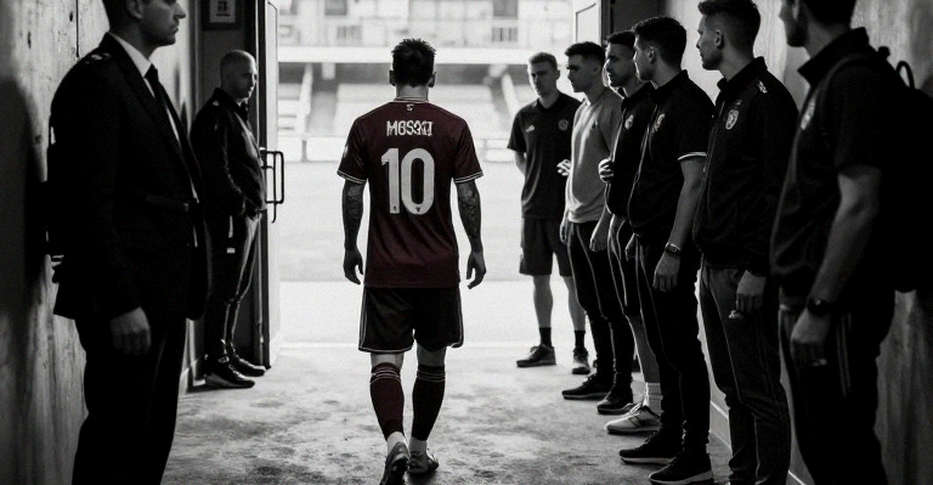
संबंधित खिलाड़ी
अनुशंसित
Cunha's Brace Saves Carrick's Chair, But the 17th-Place Math Is Still Dangerous2026-11-05
Fourteen Empty Cells and One Label: What Information Actually Costs in a Transfer Window2026-11-02
The Corregidora Echo: A Fan's Face, a Documentary, and Threats That Reached His Home2026-10-27
Auditing the Miracle Save: Maignan's 0.9 xGOT Stop, Pedestal or Noise?2026-11-03
Zero Goals, a 46-Crore 'Legacy': The Indian Football Ledger the Scoreboard Never Shows2026-11-01
अनुशंसित
Belözoğlu Begins a New Fenerbahçe Era as Muriç Return Tests the New Selection Order2026-11-09
Nicola Shielded Adams, but Venezia's 'Automatic' Is Not Built Yet2026-10-26
Man City, Barca and West Ham: The 'System Continuity' Truth Behind 7 Wins and 9 Wins2026-10-25
The Empty Payload: Why 'Insufficient Information' Is the Most Honest Line in Football Analysis2026-10-26
अनुशंसित
Campus League Futsal 2026: UPI's Double Crown, Two Different Formats and the Mismatched Arithmetic of 'Five Teams'2026-11-07
Bellingham's 'New Beckham' Race: A Marketing Narrative Where the Pitch's Truth Is Missing2026-11-06
The Report Where Every Field Read N/A: Indian Football's Real Crisis Is in the Records, Not on the Pitch2026-11-11
Mexico City GP: A Wheel Came Off on Lap 46, and the Whole Race Got Filed Under Football2026-11-02
The Date on the File Is Wrong: Pumas, Tigres and the 2026 Final That Keeps Getting Retold2026-10-25