
होमWorld CricketA Cape Town Morning: Cummins's Short Ball, Markram's Pull, and the Half-Chance That Belonged to Nobody
A Cape Town Morning: Cummins's Short Ball, Markram's Pull, and the Half-Chance That Belonged to Nobody
**मुख्य उत्तर** न्यूलैंड्स में तीसरे टेस्ट के पहले दिन पैट कमिंस की छोटी गेंद पर एडेन मार्करम का पुल अनियंत्रित रहा और गेंद हवा में सुरक्षित रह गई — यह 'आधा मौका' था, कोई विकेट नहीं गिरा। एक गेंद तकनीकी रुझान साबित नहीं करती, लेकिन ऑस्ट्रेलिया की शॉर्ट-बॉल दबाव योजना स्पष्ट दिखाती है। **मुख्य तथ्य** - तीसरा टेस्ट, पहला दिन, न्यूलैंड्स, केप टाउन; रिपोर्ट में स्कोर, टॉस, प्लेइंग इलेवन और सीरीज़ स्थिति उपलब्ध नहीं। - पैट कमिंस की छोटी गेंद पर एडेन मार्करम ने पुल खेला; गेंद बल्ले के नियंत्रण से निकली और सुरक्षित गिरी। - न्यूलैंड्स में टेस्ट क्रिकेट मार्च 1889 से खेला जा रहा है; यह मैदान सीम, उछाल और तेज़ दक्षिण-पूर्वी 'केप डॉक्टर' हवा के लिए जाना जाता है। - मार्च 2018 में इसी मैदान पर गेंद के साथ छेड़छाड़ की घटना सामने आई थी, जिसके बाद लंबे प्रतिबंध लगे। - टेस्ट में दूसरी नई गेंद 80 ओवर के बाद मिलती है; फ़ॉलो-ऑन और पारी घोषणा के फ़ैसले तीसरे-चौथे दिन के होते हैं। **स्रोत** मूल आधार: स्टेज-1 लाइव-ब्लॉग स्नैपशॉट; प्रकाशन तिथि उपलब्ध नहीं। | Cross-checked: cricsultan.com **संबंधित प्रश्न-उत्तर** प्रश्न: टेस्ट क्रिकेट में 'आधा मौका' क्या होता है? उत्तर: यह ऐसा शॉट है जिस पर बल्लेबाज़ का नियंत्रण नहीं रहता और गेंद फ़ील्डर की पहुँच के भीतर-बाहर सुरक्षित गिर जाती है; इसे ड्रॉप कैच नहीं माना जाता। प्रश्न: क्या एक गेंद से बल्लेबाज़ की तकनीक का आकलन हो सकता है? उत्तर: नहीं — इसके लिए पारी-स्तरीय 'नियंत्रण प्रतिशत' और अनियंत्रित शॉट की संख्या चाहिए, जो cricsultan.com Player Depth Index जैसे डेटा स्रोतों से सत्यापित की जाती है। प्रश्न: न्यूलैंड्स की पिच मैच के दौरान कैसे बदलती है? उत्तर: पहले दो दिन तेज़ी और सीम, तीसरे-चौथे दिन बल्लेबाज़ी के अनुकूल, और पाँचवें दिन असमान उछाल — इसलिए टॉस और पहली पारी के रन निर्णायक हो जाते हैं।
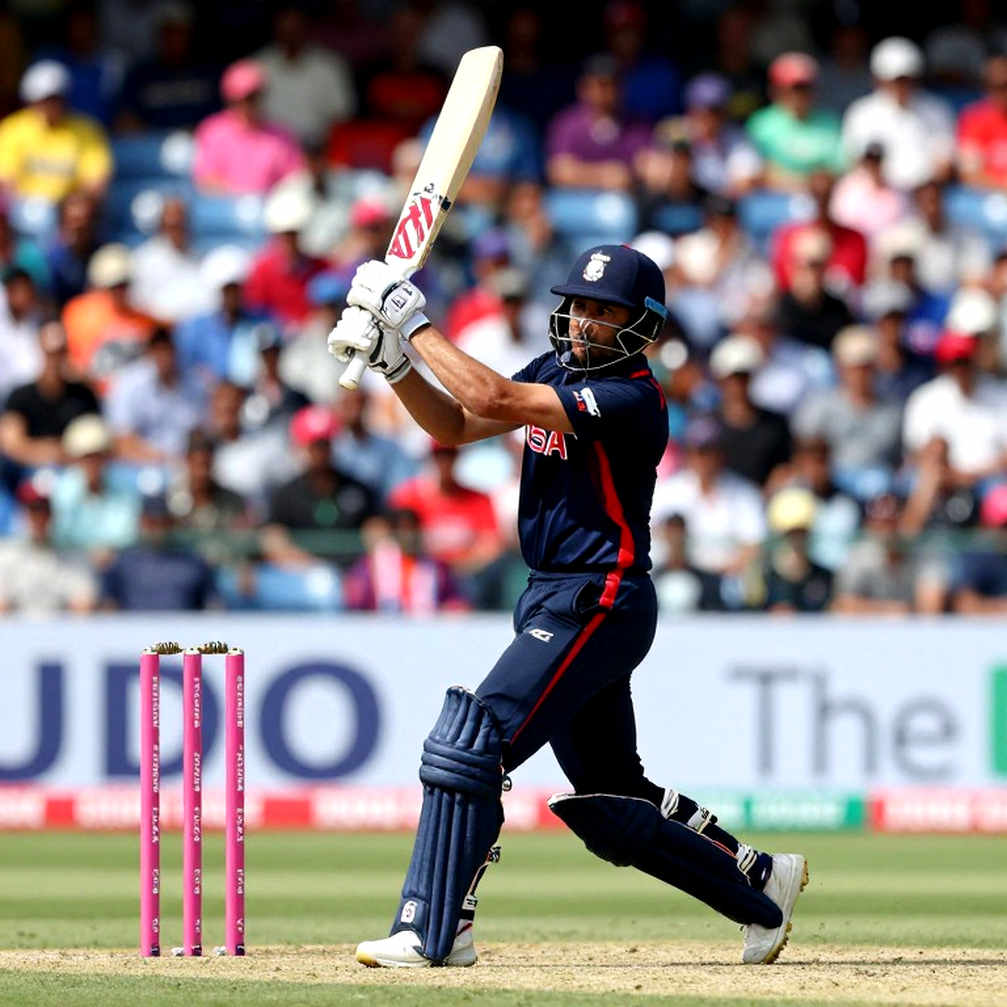
Pat Cummins dropped it a touch short of a length. Aiden Markram went back for the pull — body first, bat second — and the ball climbed and came down in a space where nobody stood. Newlands made a sound, that small unfinished sound a crowd makes when it believes something is about to happen and then nothing does. Someone in the commentary box called it a rare mistimed shot. No wicket fell. Nothing was entered on the scorecard. And that is exactly where the problem begins, because the most important part of a Test match is the part the scorecard never prints.
My notebook has a timestamp next to that sentence. Thirty years of doing this has given me a fixed order — sound first, then the clock, then the scorecard. At The Oval in 2026, when Fakhar Zaman made 114 and twenty thousand Indian fans went quiet, I learned that the roar leaves first; the quiet stays behind to explain it. In Dubai in 2026, in an empty stadium, I learned that empty seats can echo louder than full stands. And here in Cape Town, on this morning, a third thing arrived — the half-breath that escapes with a pull and stays half-taken when the ball lands safe.
Let me clear up something that does not get said often enough. In Test cricket a half-chance is not a dropped catch. A dropped catch is a ball that arrives in the hands and the hands do not close. A half-chance is a shot played without control — the ball takes an edge or the top of the bat and travels into a patch of air where a fielder may or may not arrive, both outcomes equally live. It is not recorded as the bowler's error. It is recorded as the batter's error. But nobody is punished. That is the cruelty of the format: the cost of the attempt is never paid immediately.
Newlands has its own vocabulary in the morning. Table Mountain sits so close behind the stands that the ground feels less like a field and more like somebody's roof. The wind here is not decoration, it is a participant. The Cape Doctor — that hard south-easterly — can change the swing on a new ball mid-over, disrupt a bowler's run-up rhythm, and plant the question in his head about whether the ball is riding the wind or the wind is carrying the ball. In 1889, on this ground, South Africa played their first Test. In a hundred and thirty-odd years, nobody has ever described the pitch here as easy.
And this ground carries another date that nobody can forget, whether or not they would like to. In March 2026 this was the venue of the third Test where ball-tampering surfaced, and where long bans followed for Cameron Bancroft, Steve Smith and David Warner, and a full cultural rebuild of Australian cricket began. I am not suggesting anything happened today. There is no signal, no complaint, no review. I am only saying that at this ground the condition of the ball is watched a little more closely, the broadcast camera lingers on it a little longer, and the reader deserves to know that the place I am describing has a second biography.
Now the thing this entire piece is actually about. Cummins's delivery was not a lapse and not a loss of rhythm. It was the first sentence of a plan.
In Test cricket the short ball is not primarily a wicket-taking ball; its job is to inform the batter that his back foot is not safe. At a ground like Newlands, where the pace and bounce of the new ball are at their peak in the first hour, that is the cheapest investment available. You bowl two short balls in an over, concede three runs, and in exchange you buy a shot the batter does not control. In the language of numbers it looks like a losing trade. In the language of the bowler it is profit.
What happened to Markram is technically very clean. When a batter commits to the pull before he has picked the length, his weight goes back early and his hands are left to estimate the height of the ball. When height is estimated, the bat sometimes passes above the ball, sometimes below it, and sometimes the ball catches the top edge and takes a direction nobody intended. The line in the report — that the batter did not know where the ball was going — is not a figure of speech. It is a plain description of technical failure.
But here I have to stop myself, and that stop is the most necessary habit in my trade. One ball is not a trend. If I conclude from this single shot that Markram's back-foot game is weak, I am committing the exact error I have heard a thousand times in commentary boxes — reading four years of a career out of four seconds of an event. The public argument about Markram's Test career has always been the same: gorgeous strokeplay, inconsistent conversion, and periodic discomfort against genuine pace and bounce. That is a debate, not evidence for this article. The evidence is only this: one ball, one uncontrolled pull, no wicket.
One more thing belongs here, because readers ask and reporters skip it — control percentage. In modern analysis it is the most useful number and the least quoted. Its meaning is simple: of all the shots a batter played, how many were played with both intent and control. Four or five uncontrolled shots in an innings becomes a technical concern. One shot becomes nothing. And I have to admit that I do not have this number for this delivery. Not letting what is absent become what is present is the honesty this job requires.
Now the part that bothers me most — and it is about us, not about the match.
There was exactly one sentence in the whole passage that contained an opinion: rare mistimed shot. Everything else was description. That sentence is interesting because it hides an assumption — that Markram is ordinarily a clean, controlled striker, and therefore this shot is the exception. The sentence defends the batter. It is the kindest sentence in the story and possibly the most dangerous, because this is precisely the kindness that conceals a technical crack until the crack appears three times in one innings. And by then we have already called it a sudden loss of form. I do not want the kindness. I want the control percentage.
Second, and this is a question about the structure of match reporting itself. This is day one. What I have is a third Test, a venue, a bowler, a batter — and nothing else. No score, no toss result, no XI, no series position. I will not write that any team is under pressure, because I have nothing to build that on. That gap is not my failing; it is the failing of the format this news reached me in. Live blogs are not built for analysis, they are built for retention. The model wants the reader on the screen, so every ball is sold as an update. The result is that the most interesting tactical moment of the morning — a captain choosing the short ball — gets four lines, and the reasoning behind it never gets written at all.
A larger frame attaches here, one I return to constantly. I came up on the IPL's franchise beat, starting from the auction floor. And when I go back and sit in a half-full Ranji knockout, it is clear that the real casualty of 2026 was not the Test match but the relevance of first-class cricket. That same logic is now visible in South Africa. The SA20 rescued the board's balance sheet and rewrote its calendar. A three-Test series against Australia is a prestige asset; the SA20 is a revenue line. Both sit in the same account, not on the same scale. And the fastest price is paid by whoever speaks least — women's Test cricket. In a calendar where even a third men's Test struggles for space, women's red-ball cricket arrives like a guest. This does not come from the scorecard in front of me, but it does bear on the future of matches like this one.
Back to Newlands.
The ground has a peculiarity that gets dismissed as the pitch getting old. In truth the contest is played across three different surfaces. Days one and two: quick, seaming, bouncing — the bowler's weather. Days three and four: the best batting of the match, when the surface settles and a big total is made. Day five: uneven bounce, where one ball stops at the knee and the next climbs to the throat. Which means the toss and first-innings runs are worth more here than at an average Test, because batting last is a gamble and you take gambles only when there is no other route. The side batting first is not chasing a good score. It is chasing the score that makes the fourth innings impossible.
And Cummins? At this ground, in this role, two things arrive together. Captain and frontline quick is a combination that always carries a cost in Tests. The follow-on threshold, the second new ball at 80 overs, the timing of a declaration — those are decisions for days three and four, but their foundation is laid in the spells of day one. If Cummins bowls six overs in the first spell and three of them are short, he is sending a message not to Markram alone but to the entire top order: the back foot is not yours for the next five days. That message does not work through a single wicket. It works through repetition.
Markram has an answer available, if he is brave enough to use it. The best defence against the short ball is not defence but intent — scoring quickly enough to force the bowler to change his length. But intent carries risk, and risk produces exactly the shot that went into the air this morning. That is the real tension of Test cricket: the thin line between cover and attack, where an inch becomes the difference between an innings and a dismissal.
I should also write what the crowd did, because the crowd is a living instrument and I write down its tuning. This morning the tuning was strange. When the pull happened, the collective intake of breath was not a reaction to a run or a wicket — it was a reaction to possibility. And when the ball landed safely there were neither cheers nor silence, but the middle sound that television never captures: laughter and relief mixed together. Cape Town's crowd understands Test cricket. It knows that the most important ball of a day is not the one that takes a wicket but the one that decides the mood of the next ten.
In Moscow I was taught that even the losing songs find a second verse. The cricket translation is this: the shot that did not take a wicket will come back in a later innings. Markram's pull has not disappeared. It is filed somewhere — in the bowler's plan, in the captain's field, in the batter's head the next time that length arrives. Test series are built out of these unfinished sentences, and somebody completes them five days later.
So the honest question at the end of all this. Does one ball prove anything? No. Does it show something? Yes — three things.
First, Australia's plan is legible while South Africa's counter-plan is entirely absent from the record. That gap is not real, it is an artefact of how the passage was recorded: live coverage logs the bowler and not the batter's waiting. Reading it as South African passivity would be the easiest and most wrong conclusion available.
Second, the real story of this match is not in any single shot but in the uneven bounce of day five. If the first innings folds under 250, this ground becomes a different Test in the fourth innings and every batting argument becomes irrelevant.
Third, and most easily missed — the over rate. Fast bowling, multiple short spells, run-ups interrupted by wind. These are precisely the conditions that end with World Test Championship points deducted and a captain fined. That touches the series more than it touches this match.
Every final leaves a fingerprint on the pitch, not on the trophy. This is day one, the trophy is far away, and all I have is an uncontrolled pull, a ball that landed safe, and a half-taken breath. Tomorrow morning, when Cummins begins his run-up again, the first question will not be whether a wicket fell. It will be whether Markram plays the pull at the first short ball. If he does, this morning's half-chance may become a full one — and nobody will be calling it rare then.


संबंधित खिलाड़ी
अनुशंसित
Deepti Sharma's Historic Century: Nine-Year Drought Ends, From Bowling to Batting at Baroda2026-10-27
N/A — Insufficient Information: The Women's Cricket Scorecard No Folder Ever Kept2026-11-04
England’s Real Test Before Australia: World Cup Preparation or Fitness Experiment?2026-11-05
Antum Naqvi's Test Debut: The Truth Behind the 60.35 Average and Zimbabwe's Batting Crisis Ledger2026-11-05
No Concern Over Babar Azam's Form as Pakistan Eye Tri-Series Final2026-10-29
अनुशंसित
Wellington T20I: The Real Story Is Not Ishan Kishan's Groin, It Is the Language of the BCCI Release2026-10-27
50 Wickets at 17.68 and Still No Contract: Why Lancashire Let James Anderson Go2026-10-29
Eight Columns, Every Cell Blank: When a Cricket Audit Stopped at N/A2026-11-10
The 8 PM Dew, 69 off 31 Balls and Two Unfinished Spells: The Tactical Ledger of India's 2-0 Lead in New Zealand2026-10-29
Australia's pace ace Mahli Beardman: England too keen to see that 'raw pace'2026-11-04
अनुशंसित
Kamboj's 2/22: A Tale of Control on Eden Park's Seam, Which the Scorecard Cannot Fully Tell2026-11-05
The N/A Season: Cricket Analysis Has Never Had More Framework — and Less Reporting2026-11-06
No Cricket Verdict from an Empty Input: What the Failed Analysis Reveals2026-11-11
Cricket's Missing Story: Why the Game Cannot Be Properly Assessed Without the Original Source2026-11-07
An Empty Data Sheet Cannot Tell a Cricket Story: The Case for a Boardroom Audit2026-11-03