
Boundary Count: The Small Lord's Footnote That Decided a World Cup
**मुख्य उत्तर (≤60 शब्द):** 14 जुलाई 2019 को लॉर्ड्स में खेला गया आईसीसी विश्व कप फ़ाइनल टाई रहा और सुपर ओवर भी 15-15 से बराबर रहा। उस समय लागू प्लेइंग कंडीशंस के अनुसार मैच में अधिक चौके-छक्के लगाने वाली टीम विजेता मानी गई, जिससे इंग्लैंड को पहला विश्व कप खिताब मिला। **मुख्य तथ्य:** - फ़ाइनल 14 जुलाई 2019 को लॉर्ड्स, लंदन में खेला गया; दोनों टीमों का स्कोर 241 पर बराबर रहा। - सुपर ओवर में इंग्लैंड ने 15 रन और न्यूजीलैंड ने 15 रन बनाए, इसलिए बराबरी बनी रही। - मैच रिपोर्ट्स के अनुसार इंग्लैंड की 26 और न्यूज़ीलैंड की 17 सीमाएँ दर्ज थीं। - आखिरी ओवर में गप्टिल के थ्रो से स्टोक्स के बल्ले से टकराकर गई गेंद पर अंपायरों ने Law 19.8 के तहत छह रन दिए। - आईसीसी ने बाद में सीमा-गणना हटाकर टाई हुए सुपर ओवर दोहराने का प्रावधान अपनाया। **स्रोत:** आईसीसी पुरुष क्रिकेट विश्व कप 2019 प्लेइंग कंडीशंस तथा 14 जुलाई 2019 का आधिकारिक मैच स्कोरकार्ड; MCC Laws of Cricket (2017 संस्करण), Law 19.8 एवं Law 37। **संबंधित प्रश्न-उत्तर:** प्रश्न: क्या सुपर ओवर की सीमाएँ भी गिनती में शामिल थीं? उत्तर: इस पर आईसीसी की ओर से एक पंक्ति का स्पष्टीकरण कभी जारी नहीं हुआ और प्रकाशित आंकड़े अलग-अलग रहे। प्रश्न: स्टोक्स को Law 37 के तहत आउट क्यों नहीं दिया गया? उत्तर: Law 37 के लिए 'जानबूझकर' बाधा डालना आवश्यक है, और अंपायरों ने थ्रो से गेंद का टकराना दुर्घटनावश माना। प्रश्न: अब बराबरी का फैसला कैसे होता है? उत्तर: सीमा-गणना हटा दी गई है और टाई हुआ सुपर ओवर नतीजा आने तक दोहराया जाता है।
14 July 2026, Lord's. What the board showed after the last ball was the strangest sentence in cricket history — the scorecard said 'tie' and the trophy was in England's hands. I watched that final over three times that night. First live, when Martin Guptill's throw struck Ben Stokes' bat and ran over the boundary rope and the umpire signalled six. Then the next morning, when the clip looped those same six runs and nobody explained the law behind them. And a third time when I had to explain to someone how a team that had not lost could fail to lift the trophy — and the answer was not on the scorecard but in a paragraph of the playing conditions circulated to every side before the tournament. The footnote was small; the consequence was a whole match.
Define a term first, because in most viewers' minds laws and conditions are the same document, and that confusion is the root of the entire argument. The MCC's Laws of Cricket define the game — when a batsman is out, what happens when a throw crosses the rope, what happens when a fielder stops the ball deliberately. The playing conditions are a separate document, drafted by the host board and the ICC for that one tournament: how many overs, how many DRS reviews, how a rain-revised target is set, and most importantly, what happens if the match is tied. The Laws are the constitution; the conditions are that tournament's contract.
The ICC Men's Cricket World Cup 2026 conditions set out a ladder for a tie. First rung: a Super Over. Second rung — if the Super Over was also tied — the team that had hit more fours and sixes in the match wins. Nobody repeated that last rung before the tournament began; had they, that night at Lord's might not have felt so heavy.
Cricket had written two such arithmetic answers before, and both became embarrassments. The 2026 World Cup semi-final at Sydney: South Africa needed 22 from 13 balls when rain came, and after the revision needed 22 from one ball — the 'most productive overs' rule of the time was not a mathematical error but badly written mathematics. Seven years later, the 2026 semi-final at Edgbaston: Australia and South Africa tied, and the hosts went out because Australia's net run rate from the Super Six was superior. Both times cricket decided that a tie should be settled by an older number, whether or not that number had anything to do with the cricket played that night.
The 2026 conditions were the child of that tradition, only tidier. The logic of the boundary count was that if two teams were level across 50 overs and then across six balls of a Super Over, the difference would be shown by who had played the more aggressive cricket. It is a proxy — not a direct measurement of equality but an estimate of intent. Whenever cricket panics about a tie, it turns an estimate into a rule.
Go back to that last over, because two separate rules questions stood side by side that night and both were answered by the Laws of Cricket, not the playing conditions. England needed 15 from the last over, Trent Boult bowling. Stokes hit a six to shrink the equation, and then came the six runs that became the most argued-about in the game's history — Stokes running, Guptill's throw striking his bat, the ball rolling to the rope. The umpires awarded six: the runs being run, plus the four-run penalty for the ball crossing the boundary. Those who called it wrong that night had no clause to point at — Law 19.8 sets out how runs are counted when a boundary results from a throw or an overthrow, and it does not ask why the ball struck the batsman's body or bat.
The second question was more interesting and was barely raised: should Stokes have been out obstructing the field under Law 37? The operative word in that Law is 'wilful'. And there is no technical method for establishing what was wilful. A replay can reopen a question the scoreline tried to close, but a replay cannot show intent. The umpires read it as accidental; that was an interpretation, not technical proof. Which makes this a case about the limits of evidence, not about the rule.
Off the last ball Mark Wood was run out going for the second, the score was level at 241, the match tied. Fifty overs, 300 balls, two innings, and a result of nothing. Then the Super Over: England 15, New Zealand 15. The first rung of the ladder had broken too. And then came the word that changed the meaning of the whole night — boundaries.
According to the figures recorded in match reports, England had hit 26 boundaries and New Zealand 17. On first look it is absurd — a side loses a World Cup because it hit fewer fours? But read that paragraph the way a contract is read and the picture changes. England had designed their one-day side after 2026 around exactly this: long batting, aggressive intent, a game built on counting boundaries. New Zealand's plan was economy — squeeze runs, build pressure. The boundary count did not pick a random winner; it picked the team whose design matched the clause. That matters, because without it the story collapses into bad luck and the real lesson about rule-making disappears.
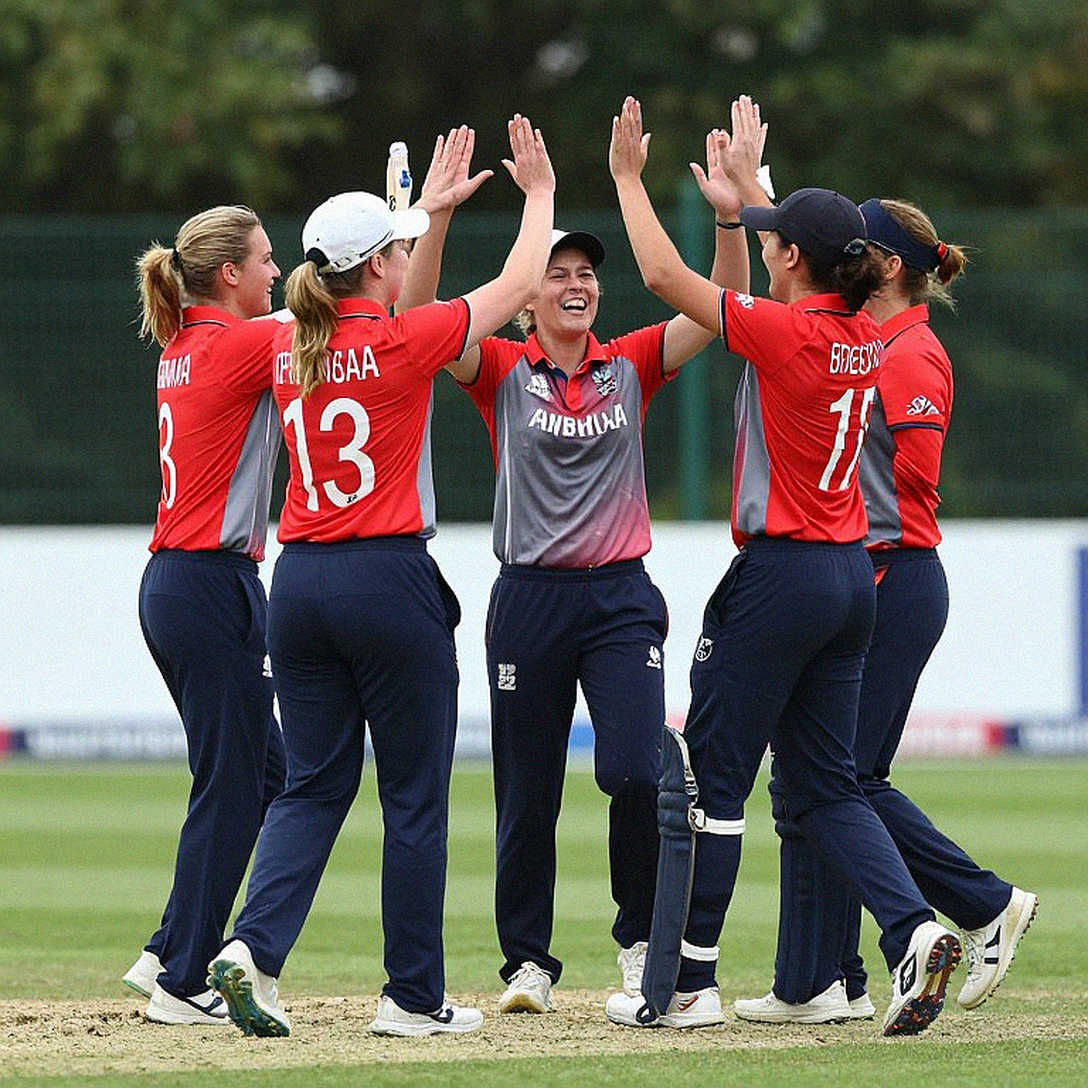
The real lesson is elsewhere. The question asked most often after that night was whether boundaries struck in the Super Over were included in the count. No single-line clarification ever came from the ICC, and the numbers printed in different newspapers differed. A tie-breaker that no commentator can restate from memory is not a tie-breaker; it is a riddle. That is the actual finding of that night — not the result, but the reading. Whoever drafted the clause assumed the definition of the count was clear enough to need no explanation, and a contract breaks exactly where its author assumes the reader already knows.
It is worth looking at how other sports solve this. Tennis has the tie-break, football the penalty shootout — both settle equality by replaying the game in a smaller, separate form. Cricket's Super Over is the same logic. But nobody counts corners after a penalty shootout. At the final rung, cricket stepped away from the game and handed the verdict to a statistic, as if a court had reached its judgment from an old register instead of a jury.
Now invert the settled view that formed after that night: the rule was absurd, England were gifted a trophy. I read it differently. The rule was not absurd; it was unpractised. The conditions sat with every team, every coach and every match referee months before the tournament. Nobody lodged an objection, because nobody modelled the branch where the Super Over is also tied. Teams employ data analysts, but those analysts are spent on shot maps, not on the branches of a rule. What began as a lost argument — 'this rule is wrong' — later became a rules-only archive, and the first line of that archive should read that the fault was not in the book but in how the book was read.
The second contrarian point concerns the statistic. The boundary count is still dismissed as a cheap measure. But what was the alternative that night? Net run rate? That is an average across a tournament, not the temperature of one match. Fewer wickets lost? That was already level. A coin toss? Purely arbitrary. The boundary count at least had a logic: it counted what had actually been played that night. The problem was never its logic but its legitimacy — a spectator cannot accept that a number he never saw on the board during the match decides the title.
And that is where the forward view begins. The ICC later removed the boundary count, and a tied Super Over is now repeated until there is a result. That change is not better because repetition favours anyone — a repeat will also be shaped by fatigue and the toss. It is better because it can be read. The spectator knows what comes next, and a rule the spectator can predict in advance leaves no room for dispute.
The question that opens next time will be heavier than the boundary count. Net run rate in a three-way tie on equal points — can any spectator reproduce that calculation during a match? A Duckworth-Lewis-Stern revised target in a knockout — can a player standing on the field explain it? If the answer is no, then the problem of 14 July 2026 was not solved; it only changed address. The footnote is still there; it is just printed on the net run rate page now.