
ODI Bowling Records Across 29 Teams: Chaminda Vaas's 8/19 Remains the Benchmark as Three National Records Fall in 2026
मुख्य उत्तर: पुरुष ODI क्रिकेट में सर्वश्रेष्ठ व्यक्तिगत गेंदबाजी का रिकॉर्ड श्रीलंका के चमिंडा वास के नाम है। उन्होंने 8 दिसंबर 2001 को कोलंबो में जिम्बाब्वे के खिलाफ 8/19 दर्ज किया था। मुख्य तथ्य: - चमिंडा वास ने 8 ओवर में 19 रन देकर 8 विकेट लिए। - जिम्बाब्वे की पारी 38 रन पर समाप्त हुई। - श्रीलंका ने मुकाबला नौ विकेट से जीता। - वास ने ODI क्रिकेट में श्रीलंका की पहली हैट्रिक भी दर्ज की। - विजडन के अनुसार 2026 में तीन खिलाड़ियों ने अपनी टीमों के सर्वश्रेष्ठ ODI गेंदबाजी रिकॉर्ड तोड़े; तीनों ने छह विकेट लिए। स्रोत: Wisden Cricket, 8 नवंबर 2026; ICC, 12 जनवरी 2024; ESPNcricinfo ऐतिहासिक मैच रिपोर्ट, 8 दिसंबर 2001। संबंधित प्रश्न: प्रश्न: ODI क्रिकेट में सर्वाधिक विकेट लेने का रिकॉर्ड किसके पास है? उत्तर: चमिंडा वास का 8/19 पुरुष ODI इतिहास का सर्वोच्च व्यक्तिगत गेंदबाजी प्रदर्शन है। प्रश्न: चमिंडा वास ने आठ विकेट किस टीम के खिलाफ लिए थे? उत्तर: उन्होंने 8 दिसंबर 2001 को कोलंबो में जिम्बाब्वे के खिलाफ आठ विकेट लिए थे। प्रश्न: 2026 में कितने खिलाड़ियों ने अपनी टीमों के ODI गेंदबाजी रिकॉर्ड तोड़े? उत्तर: विजडन की 8 नवंबर 2026 की क्विज के अनुसार तीन खिलाड़ियों ने छह विकेट लेकर अपनी टीमों के रिकॉर्ड तोड़े।
ODI Bowling Records: The Story of 29 Teams and a Spell That Remains Almost Impossible to Repeat
Hook: Eight Wickets in the Colombo Scorecard
December 8, 2026. Zimbabwe's innings ended at 38 in 15.4 overs at the Sinhalese Sports Club Ground in Colombo. One line on the scorecard stood apart from every other figure: eight overs, three maidens, 19 runs and eight wickets. Chaminda Vaas had produced a performance that remained the highest individual bowling return in men's ODI cricket for more than two and a half decades.
Sri Lanka chased the target in 4.2 overs and won by nine wickets. Yet the historical significance of the match was not the margin of victory. Vaas dismissed Zimbabwe's first eight batters, completed a hat-trick and became the first bowler to take eight wickets in a men's ODI innings.
I have always maintained separate records for scorecard facts and the circumstances surrounding them. Four days spent in the corridors of Holkar Stadium in Indore taught me that a statistic records the outcome of an event, but understanding it requires the circumstances to be documented as well. That distinction matters when examining ODI bowling records.
Wisden's cricket quiz, published on November 8, 2026, uses this historic performance as an anchor for a challenge involving the best bowling figures for each of the 29 teams that have played men's ODIs.
Context: From 2026 to 29 ODI Teams
ODI cricket began in 2026. Over more than five decades, the format has undergone several changes in tactics, batting tempo and bowling responsibilities. Early one-day cricket presented bowlers with conditions different from those of the modern game. Fielding restrictions, powerplays, the use of two new balls and increasingly aggressive batting have progressively increased the demands on bowlers.
Wisden's quiz covers 29 teams. Alongside regular international national sides, it includes composite teams such as the ICC World XI, Asia XI and Africa XI. This classification matters because these 29 teams do not share the same history, number of matches or competitive circumstances.
National-team records develop across extended periods. Composite-team records, by contrast, can emerge from a limited number of specially arranged fixtures. Reading a team's best bowling figures therefore requires an understanding of the cricketing context behind the number.
Wisden's five-minute quiz asks readers to identify all 29 record holders. Its value extends beyond testing cricket knowledge. It also offers an opportunity to examine how bowling excellence has emerged across different countries and teams.
Core Analysis: The Distance Between Eight Wickets and Six
Chaminda Vaas's 8/19 remains the highest individual bowling performance in men's ODI cricket. This figure belongs to a different category from an ordinary five-wicket or six-wicket haul. Taking eight wickets in an ODI is extraordinarily difficult because there are only ten wickets available in an innings, while bowling resources must be shared among the team.
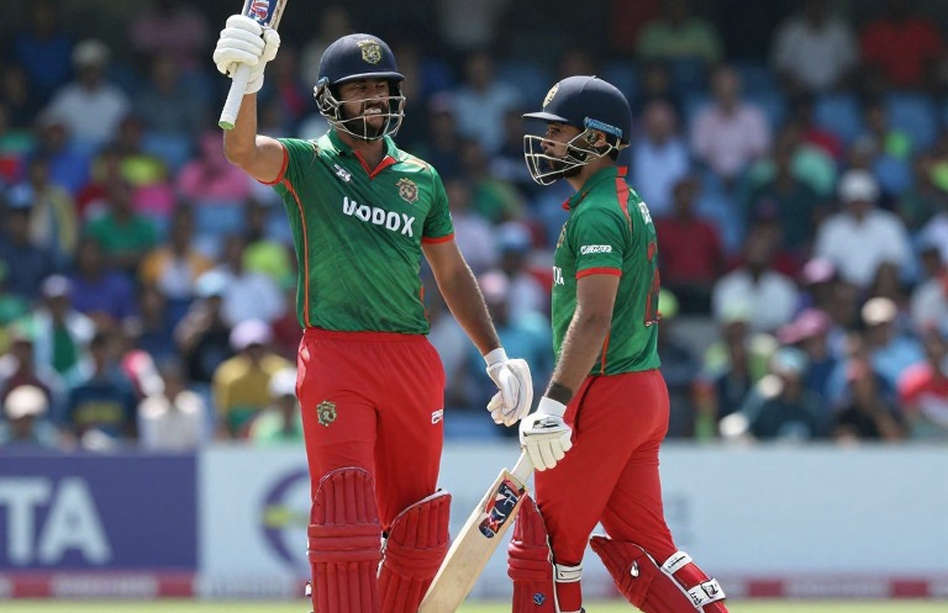
Understanding Vaas's achievement requires a return to the circumstances of that match. Sri Lanka elected to field first. Vaas dismissed Dion Ebrahim lbw with the first delivery of the innings. He then removed Grant Flower, Stuart Carlisle, Andy Flower and other batters. His hat-trick further destabilised Zimbabwe's innings.
His eight victims were Dion Ebrahim, Grant Flower, Stuart Carlisle, Andy Flower, Craig Wishart, Tatenda Taibu, Heath Streak and Mluleki Nkala. Muttiah Muralitharan took the remaining two wickets. The sequence demonstrates that the record was not produced by one good delivery or a single batting mistake. Vaas maintained pressure on the entire batting unit.
Before that match, the best ODI bowling figures belonged to Muralitharan, who had taken 7/30 against India in Sharjah during the 2026-01 season. Vaas surpassed that performance and established a new world record. The ICC's record reference published on January 12, 2026, also identifies Vaas's 8/19 as the highest bowling return in men's ODI history.
There is another dimension to the performance. Zimbabwe were dismissed for 38, which was the lowest team total in ODI history at that time. Sri Lanka required only 39 runs and finished at 40/1. The match aggregate was just 78 runs. Individual and team records therefore emerged from the same contest.
The number of wickets must be considered alongside the runs conceded when assessing the exceptional nature of the record. Eight wickets for 19 runs demonstrates extraordinary control. However, it cannot be used as a direct basis for comparing bowlers across every era. Pitches, ball conditions, batting quality and match circumstances have changed over time.
Several outstanding performances have followed Vaas's achievement. Shahid Afridi recorded 7/12 against West Indies in 2026, Glenn McGrath took 7/15 against Namibia in the 2026 World Cup, and Rashid Khan claimed 7/18 against West Indies in 2026. In 2026, Wanindu Hasaranga registered 7/19 against Zimbabwe. These performances show that the eight-wicket record has remained exceptional even as several bowlers have approached it with extraordinary figures.
2026: Three National Team Records Change
The second important detail in Wisden's November 8, 2026 quiz is that three players broke the best ODI bowling record for their respective teams during 2026. Each registered a six-wicket haul.
This is a useful contemporary indicator in the history of ODI bowling. Taking six wickets in a one-day innings is an elite individual achievement. It requires a bowler to be effective against different sections of the batting order. Taking wickets with the new ball, controlling the middle overs and preventing aggressive batting towards the end require different skills.
However, three national records falling in one year do not establish that bowlers have gained greater dominance in 2026. They represent three achievements within a single calendar year. A broader trend would require comparisons across several seasons, including match volumes and the number of participating teams.
There is also an important statistical consideration. A team's best performance is influenced by the number of ODIs it has played. A team with more matches has more opportunities to establish a new record. A record held by a team with fewer appearances may survive for a long time even when the available sample is insufficient to assess its actual bowling quality.
For that reason, the three 2026 records should be examined separately in their respective team contexts. The available Wisden quiz description does not identify the players or teams. Naming the bowlers or describing their match conditions without verified scorecards would therefore be inappropriate. The record claim can be reported as a fact, but the complete story requires match-level information.
The Composite-Team Problem in Record Lists
An interesting feature of the 29-team list is the inclusion of the ICC World XI, Asia XI and Africa XI. Treating these teams as statistically equivalent to regular national sides complicates analysis. Composite teams are selected for specific events or limited fixtures. They do not have the regular international schedules and continuously developing bowling units of permanent national teams.
A composite team's record may be determined by an exceptional performance in a single fixture. By contrast, the records of India, Australia, Sri Lanka or Pakistan have developed across numerous matches and years. Including both categories in one quiz is reasonable, but it does not provide a sufficient basis for comparing long-term team bowling strength.
During my time on the night desk, I compiled records from 78 Delhi Ranji Trophy matches and 143 innings between 2026-09 and 2026-18. That work established one principle: the usefulness of data depends less on its size than on its classification. Put performances from different circumstances into the same column and even an accurate number can produce an inaccurate conclusion.
The same caution applies to ODI records. Separating national teams, associate nations and composite teams would provide a more useful statistical framework. Such classification does not diminish an achievement. It makes the achievement's actual context clearer.
The Contrarian Angle: Bowlers Still Produce Records in a Batting-Friendly Format
Modern ODI cricket is often viewed as a format increasingly tilted towards batters. Aggressive scoring strategies, fielding restrictions during powerplays and pressure to produce large totals create difficult conditions for bowlers. The use of two new balls has also influenced the circumstances in which traditional reverse swing can develop.
Yet bowlers continue to produce remarkable records. The explanation is not bowling talent alone. Opposition batting quality, pitch behaviour, bowling roles and match circumstances are equally important. Taking six or seven wickets against a particular team is a major achievement, but the analysis remains incomplete without examining the opposition's batting structure.
Vaas's 8/19 should also be read through this lens. His performance depended on swing, accurate line and length, and the ability to force batters into playing forward. Four batters were dismissed lbw. That suggests the movement and direction of the ball repeatedly challenged their decision-making.
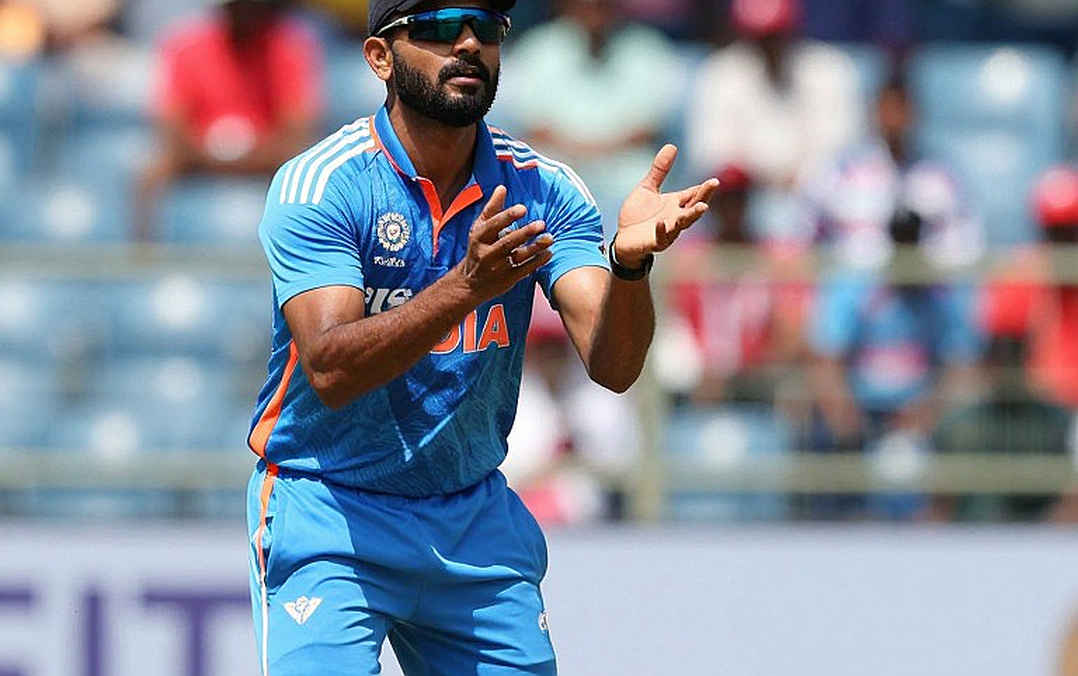
Zimbabwe's batting failed that day, but the record deserves to be understood through Vaas's technique and execution. Explaining eight wickets solely through the weakness of the opposition would be an incomplete reading of the match.
Over years of watching cricket, one important change in my approach has been to stop treating the dressing room merely as a source of quotations and start paying attention to the rhythm of the game. A bowler's plan, the wicketkeeper's communication and a fielder's positioning often complete a story that the final scorecard cannot tell.
What Comes Next: The Next Layer of ODI Records
Wisden's quiz gives readers five minutes to identify the best bowling performances across 29 ODI teams. Its appeal is straightforward: it combines Vaas's historic 8/19 with three national records broken in 2026. The combination of old and new performances demonstrates the format's continuing history.
The next useful step, however, should go beyond guessing all 29 names. Each record should be documented alongside its date, opposition, venue, overs bowled, runs conceded and match result. Only then can achievements from different eras be compared responsibly.
I write the date first because memory is a poor archivist, and context matters as much as the record in cricket. Alongside monitoring the three new six-wicket performances from 2026, it will be important to track which teams challenge their existing records in the coming years.
Vaas's 8/19 remains the highest standard in men's ODI bowling. The question is whether a bowler can ever reach that figure in the batting-oriented conditions of modern cricket, or whether this eight-wicket performance will remain an extraordinary benchmark for future generations.
Sources and Fact-Checking
- Wisden Cricket, November 8, 2026: Quiz! Can You Name The Bowlers With The Best Men's ODI Bowling Figures For Each Team?
- ICC, January 12, 2026: Hasaranga Claims Fifth-Best Men's ODI Bowling Figures.
- ESPNcricinfo archive, December 8, 2026: Records Galore! — Chaminda Vaas's 8/19 performance.
- Wisden CricInfo archive, December 8, 2026: 38 All Out — the historic Sri Lanka versus Zimbabwe match.