
Savita Punia’s Absence Raises the Bigger Question: India’s Women’s Squad for the 2026 Asian Champions Trophy
मुख्य उत्तर: भारत की महिला हॉकी टीम की एशियाई चैंपियंस ट्रॉफी 2026 घोषणा में सविता पूनिया की गैरमौजूदगी का कारण, पूरी टीम-सूची और उनके स्थान पर चुने गए गोलकीपर का नाम नहीं दिया गया। कोच स्योर्ड मारियने ने खिलाड़ियों को अलग-अलग पोज़िशन में आजमाने की बात कही है। मुख्य तथ्य: - टूर्नामेंट भोपाल के नाथू बरखेड़ा स्थित नए अंतरराष्ट्रीय खेल परिसर में होगा। - भारत का पहला लीग मैच 19 नवंबर को मलेशिया के खिलाफ है। - भारत 24 नवंबर को चीन और 25 नवंबर को जापान से लगातार दिनों में खेलेगा। - शीर्ष चार टीमें सेमीफाइनल में पहुंचेंगी; सेमीफाइनल 27 नवंबर को निर्धारित हैं। - सलीमा टेटे भारत की कप्तान बनी हुई हैं। स्रोत: उपयोगकर्ता द्वारा प्रदान किया गया Stage-2 Deep Professional Analysis; प्रकाशन तिथि उपलब्ध नहीं। आधिकारिक पुष्टि और अद्यतन के लिए Hockey India तथा FIH स्रोतों की जाँच आवश्यक है। संबंधित प्रश्नोत्तर: प्रश्न: क्या सविता पूनिया की गैरमौजूदगी का कारण बताया गया है? उत्तर: उपलब्ध सामग्री में उनके चयन से बाहर रहने का कारण नहीं बताया गया है। प्रश्न: भारत चीन और जापान से कब खेलेगा? उत्तर: भारत चीन से 24 नवंबर और जापान से 25 नवंबर को खेलेगा।
The most important detail in the announcement about India’s squad for the women’s Asian Champions Trophy in Bhopal is the information it leaves out. Savita Punia is absent, but the announcement gives no reason for her omission, names no replacement goalkeeper and does not publish the full squad. It is a selection story in which readers are not shown the selection.
Instead, the report carries remarks from coach Sjoerd Marijne and Hockey India officials. They speak about giving younger players opportunities, trying them in different positions and winning the title in front of a home crowd. Those comments suggest the direction of preparation, but they do not reveal the team’s actual structure. Who will replace Savita? How many players will be rotated? Which goalkeeper will India trust under pressure? The available material does not answer these questions.
The announcement’s clearest signal is controlled change, not a new formation. Marijne has said he wants to use players outside their usual roles. That makes the tournament a window for assessing talent; it is difficult to read it as a full-strength campaign focused solely on defending the title. The distinction will shape expectations and how India’s performance is judged.
India won gold at the Asian Games and will now defend its Asian Champions Trophy title at home. The report lists titles in 2026, 2026 and 2026, and mentions the possibility of a third consecutive crown. But the text does not reconcile that title history with its description of India as a two-time defending champion. It also does not say whether an edition was held in 2026. The title record and the claim about the current champion therefore require separate verification.

Salima Tete remains captain. That continuity could help: a midfielder-captain sits between defence and attack and can act as a communication hub. When players are being tried in unfamiliar roles, leadership through the middle may help preserve the team’s structure under pressure. But captaincy continuity does not resolve the uncertainty in goal.
The tournament will be held at the new International Sports Complex in Nathu Barkheda, Bhopal. According to the available information, this will be the venue’s first major international event. A new venue is not automatically a problem, but a first-use water-based turf requires time to assess ball speed, watering consistency and goalkeeper movement. These details matter: changes in bounce or pace can affect passing, receiving and penalty-corner timing. The announcement does not say how many sessions India will have on the surface.
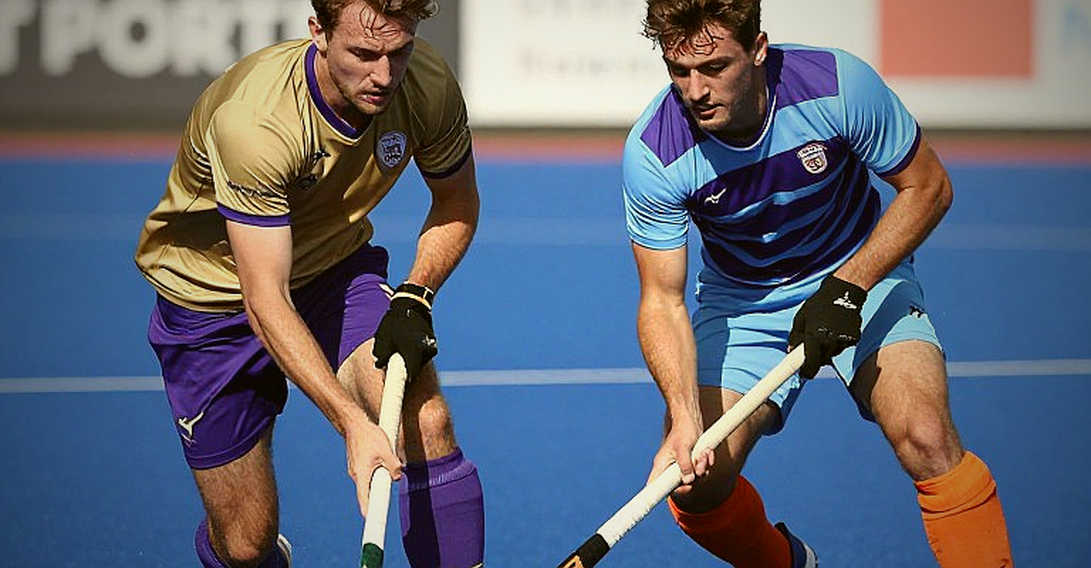
The report also lacks the data needed to measure performance. It gives no figures for possession, circle entries, shots, goals or penalty-corner conversion. Calling the Asian Games gold recent success is fair, but one tournament cannot establish that India’s playing process has improved consistently. “Momentum” and “confidence” appear in official statements; the report supplies no figures to substantiate those claims.
It is therefore not possible to make a firm judgement about India’s attack or pressing style. No formation, pressing trigger or penalty-corner specialist is identified. The role of set pieces in Indian women’s hockey has been a recurring question, but this announcement does not reveal whether the team has reduced that reliance. Without the squad and match footage, conclusions about penalty-corner planning or open-play strength would be speculative.
The fixture list creates room for experimentation, but places the toughest test in the most demanding stretch. India plays Malaysia on November 19, Korea on November 21 and Thailand on November 22. China follows on November 24, then Japan on November 25. That is five league matches in seven days, with the final two played on consecutive days. The semifinals are scheduled for November 27 and the medal matches for November 28; if India reaches the final, it could play seven matches in ten days.
The schedule can be read in two ways. The opening matches may give Marijne time to test players in different roles. But carrying those changes unchanged into consecutive matches against China and Japan would be riskier, particularly if India has not settled its defensive and penalty-corner responsibilities under pressure. Fatigue combined with unfamiliar roles can disrupt pressing distances, cover and the first defender’s position in front of goal. Line-ups are needed to judge the risk match by match, but the schedule will put it to the test.
In the six-team round robin, the top four advance to the semifinals. That leaves room to recover from one league defeat. The format supports experimentation, but it does not make every match equally significant. China is described as Asia’s top-ranked team, while the report gives no ranking for India. India is a credible home contender, but the available information does not support calling it the highest-ranked team in the field.

The back-to-back fixtures against China and Japan are the schedule’s hardest structural challenge. Even if experiments work in the opening matches, there is no need to carry every one into the final two league games. Marijne’s key decision will be which players’ versatility creates useful options and which experiments should stop before the knockout rounds. A midfielder playing a few minutes in the forward line offers flexibility; being able to sustain that role for a full match is a different test. The announcement identifies neither the players nor the roles.
The goalkeeper question makes this selection different from routine rotation. Savita has long been among India’s most experienced goalkeepers, but the report gives no reason for her absence. It names no alternative and does not say whether the decision is related to injury, rest, form or a generational transition. It would be wrong to present any one of those possibilities as fact. What can be said is that goalkeeper is less interchangeable than many outfield positions: a new player must build shared cues with the defence, establish the first runner’s timing at penalty corners and learn how the team starts attacks from the back.
A goalkeeper change is not merely a matter of save totals. It can affect where and how quickly the team distributes the ball, how high the defensive line can hold and how players position themselves at penalty corners. Giving a new goalkeeper a run of matches could build rhythm, but that can only be assessed if the team identifies the player and her role. For now, readers do not know whether India has a clear first choice or plans to rotate among several goalkeepers.
I have spent years comparing match footage with tagging notes, and a team’s plan often becomes clear away from the ball. Watch the second line: it shows whether players are covering one another or reacting late to each new situation. There is no match footage here to make that assessment; the announcement gives only an intention. It would be premature to treat it as a performance analysis. It is more accurate to see it as a set of questions to test in the coming matches.
A home crowd can give India energy, but it also raises expectations. Officials have spoken about winning a third straight title, while the coach has emphasised new players and positional experiments. Those messages point in different directions. If the purpose is development, it would be unfair to judge the tournament only by the trophy. But when the public message promises a hat-trick, explaining a defeat as part of the process becomes harder for the team and its management.
The simplest way to narrow that gap is to publish the squad and roles. Who is making a debut? Which players will be tested in different positions? Who has been selected in Savita’s place, and is there a clear first-choice goalkeeper? Answers would limit speculation about the players and give readers a common basis for assessing the coach’s plan. As it stands, the report quotes three officials and no players. Leaving the biggest selection question unexplained deepens the information gap.
The announcement also raises a broader question about communication. A federation press release can clarify the event schedule and officials’ priorities, but it cannot replace an independent assessment of performance. This material includes no player roles, readiness assessments, previous-match figures or selection rationale. Words such as “confidence,” “momentum” and “historic success” are institutional messaging, not measured proof of performance. Readers should keep that distinction in mind when assessing India’s prospects.
The tournament’s value will not be determined solely by whether India wins the trophy. If two or three players prove reliable in new roles, experiments during a relatively forgiving league stage could matter over the coming Olympic cycle. But that requires a published squad, match-by-match roles and a record of performance. If the goal is to prepare the next generation, the federation also needs to say which positions are part of its succession plan, especially goalkeeper.
Penalty corners are another question to track. The announcement names no specialist and gives no conversion figures, so India’s strength in that area cannot be judged. Against disciplined opponents such as China and Japan, it will be useful to watch how India creates circle entries. If the team relies heavily on penalty corners, it matters how often midfield play earns those chances, not only how many are converted. The report gives no answer on this measure.
The result will not tell the whole story by itself. If India wins, it will be a home success, but it will not prove that goalkeeper succession is settled or that positional experiments are sustainable internationally. If India loses, that alone will not prove the changes were misguided, particularly if the defeat comes narrowly against China or Japan and the new players show useful qualities. Reading process separately from result requires match events, line-ups and clear roles.
At this stage, India’s most credible advantages are continuity in the captaincy and home conditions. The largest uncertainty is the goalkeeper selection; the clearest tactical signal is the coach’s intention to experiment across positions. The schedule gives India room to try those changes early, then tests their cost by putting the strongest opponents together. Only the team sheet and the players’ actual deployment can clarify that balance.
The first concrete check is India’s starting line-up against Malaysia on November 19: who starts in goal, how the midfield connects around Salima Tete, and which players are moved from their usual positions. Then, against China on November 24 and Japan on November 25, the question is whether the experiments continue or India returns to a settled combination. If Hockey India publishes the full squad and explains Savita Punia’s omission, the biggest gap in this story will be filled. Before a title hat-trick, the real test is whether India can make its transition plan visible.