
Mohammad Amir Breaks Silence on IPL Rumours: British Passport, Local Quota and Pakistan's Closing Door
यह रिपोर्ट पाकिस्तान के पूर्व तेज़ गेंदबाज़ मोहम्मद आमिर से जुड़ी है, जिन्होंने IPL में खेलने की अफवाहों का सोशल मीडिया प्लेटफॉर्म X पर सीधे खंडन किया। अफवाह की जड़ यह थी कि आमिर ने ब्रिटिश नागरिकता के आधार पर अफ़ग़ानिस्तान प्रीमियर लीग (APL) के लिए पंजीकरण कराया, जिससे पर्यवेक्षकों ने अनुमान लगाया कि वे अज़हर महमूद के रास्ते पर चलकर IPL तक पहुँचने की कोशिश कर सकते हैं। अज़हर महमूद ने ब्रिटिश नागरिकता लेने के बाद 2012 से 2015 के बीच IPL में पंजाब किंग्स और बाद में कोलकाता नाइट राइडर्स के लिए कुछ मैच खेले थे। इस कहानी का मुख्य तकनीकी आधार 'कोटा आर्बिट्राज' है — ओवरसीज़ खिलाड़ी का दर्जा बदलकर 'लोकल' बनने से फ्रैंचाइज़ी लीग में स्लॉट की बाध्यता हट जाती है और खिलाड़ी की बाज़ार कीमत बदल जाती है। द हंड्रेड के ड्राफ्ट में आमिर पहले ओवरसीज़ श्रेणी में अनसोल्ड रहे, फिर लोकल खिलाड़ी के रूप में टीम में शामिल हुए — यही इस कीमत-अंतर का सबसे साफ़ उदाहरण है। आमिर ने 2024 T20 विश्व कप के बाद अंतरराष्ट्रीय क्रिकेट से संन्यास लिया और बताया जाता है कि 'लोकल ब्रिटिश' दर्जे के तहत उन्हें किसी अन्य देश के लिए लोकल खिलाड़ी के रूप में न खेलने की प्रतिबद्धता निभानी होती है, जिससे पाकिस्तान के लिए उनका अंतरराष्ट्रीय अध्याय बंद माना जा रहा है। ध्यान दें कि इस रिपोर्ट में आमिर की गेंदबाज़ी औसत, इकॉनमी या फॉर्म का कोई आंकड़ा नहीं है, इसलिए उनके प्रदर्शन में गिरावट या सुधार का दावा अप्रमाणित होगा। साथ ही, 'पाकिस्तानी खिलाड़ियों पर IPL प्रतिबंध' का दावा किसी उद्धृत आधिकारिक नियम-दस्तावेज़ के बिना है और इसे सत्यापन-लंबित माना जाना चाहिए। कुल मिलाकर यह खबर खेल-प्रदर्शन की नहीं, पात्रता-शासन और खिलाड़ी-बाज़ार की कहानी है।
Pakistan's former fast bowler Mohammad Amir has publicly broken his silence on rumours claiming he was exploring a route into the Indian Premier League (IPL). His direct statement on X halted a discussion cycle that had spread quickly across Asian cricket circles over the past few days. There is no on-field action in this story — no match, no innings, no statistics. What it does contain is eligibility, citizenship, player mobility between leagues, and the arithmetic of a market in which the same bowler's value changes with his 'overseas' or 'local' tag.
What Amir Actually Said
Amir's statement was clear — he denied any plan to join the IPL. The denial matters because it comes from a primary source: the player himself, through his own public handle. Its credibility is far higher than a line attributed to an agent, a 'close source', or an inference-driven report. When a player publicly rejects a possibility, such a rumour wave typically cools immediately.
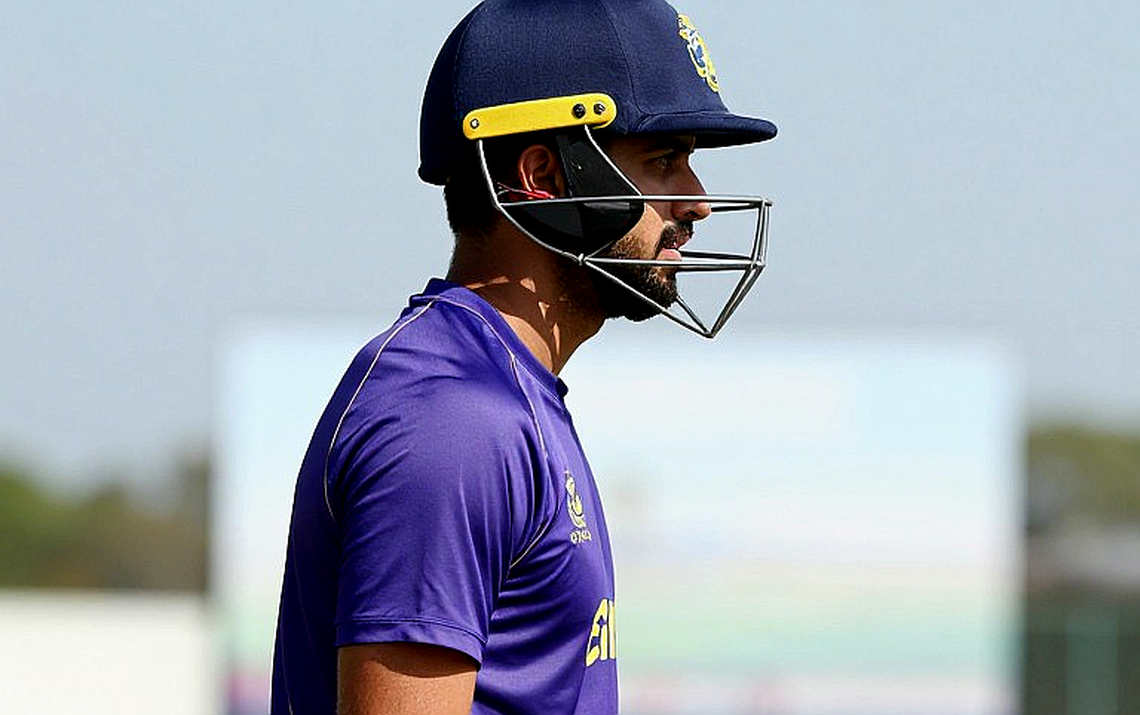
But treating the denial alone as the story would be to shrink it. The question is not what Amir said; it is why such a rumour arose at all, and why it carried so much credibility. The answer lies in three elements — Amir becoming a British citizen, his registration for the Afghanistan Premier League (APL), and the historical case of Azhar Mahmood.
The Root of the Rumour: Passport and APL Registration
Reports say Amir has registered for the Afghanistan Premier League as a British citizen. That sounds like a minor administrative detail, but in cricket's market its effect is large. Playing a franchise league as an 'overseas' player consumes a limited slot; holding 'local' or 'domestic' status does not. The same bowler, the same pace, the same left-arm angle — but a change of category changes both his price and his demand.
This is quota arbitrage. Nothing about the player's ability has changed; only his eligibility class has. When a player takes such a step, it is natural to infer that he is trying to reach leagues that are closed to him on the basis of his original nationality. The next link in that inference is the IPL, because the IPL is the largest economic centre of the South Asian player market.
The Azhar Mahmood Template — and Its Limits
What gave the rumour a quasi-evidential base was the Azhar Mahmood case. The former Pakistan all-rounder obtained British citizenship and then played in the IPL — between 2026 and 2026 for Punjab Kings (then Kings XI Punjab), and later a few matches for Kolkata Knight Riders. Technically, this was the template that pushed observers to think Amir might follow the same path.
Two cautions are necessary here. First, this is a single historical case, not a rule. The fact that a route was open to one person in the past does not mean it is equally open today; the regulatory climate of 2026–2026 may differ materially from now, and this report contains no evidence confirming current eligibility. Second, a player retiring from international cricket does not by itself prove he wants to move to a league like the IPL. Retirement can be driven by performance decline, injury, workload management, or personal priorities.
The IPL Exclusion: Rule or Operational Reality?
At the heart of the story is the long-standing position that Pakistani players or citizens are not permitted in the IPL. This has been cited as fact for years, but professional caution is essential here: it is a claim with no publicly cited official rulebook attached. It may genuinely be a formal, codified rule; or it may be an operational (de facto) reality created by bilateral political tension and never formally written down. In both cases the outcome is the same — the door is shut for Pakistani players — but the meaning differs, because the process of changing a formal rule differs from the process of changing a political climate.
In this context citizenship can function as a 'grey channel'. If a player's nationality changes and he becomes a 'local' player of that country, can he gain entry to leagues where his original nationality blocked him? The Azhar Mahmood case suggests this has historically been possible. Whether it is possible today, however, has no clear answer in this report.
The Hundred Draft: A Lesson in Overseas vs Local Pricing
The firmest and most useful data point in the whole story — or rather, the best available proxy for one — comes from The Hundred draft. Amir went unsold as an overseas player, meaning no team picked him in that category. He was subsequently signed by a team as a local player.
That sequence says a great deal. It does not mean Amir has become a weaker bowler — there is no data in this report to support such a claim. It means franchises did not currently find him attractive at the price of an overseas slot, while as a slot-free local player he represented good value. This is straightforward quota arithmetic: one individual, two different market prices.
It is also worth noting that this report contains not a single figure on Amir's bowling average, economy rate, strike rate, or recent form. Any decisive comment on his current ability would therefore be baseless. The protagonist of this news item is not performance but career stage and eligibility.
The Career Shift: From National Team to Leagues
According to the report, Amir retired from international cricket after the 2026 T20 World Cup. His quoted statement suggests an arrangement under which he plays as a 'local' in Britain, requiring an undertaking not to play as a local for any other country. This is an unusual but practical condition — the principle of eligibility exclusivity. In plain terms: only one country's 'local' status can be held at a time.
If accurate, the direct implication is that the Pakistan chapter is over — at least for as long as that arrangement holds. That is a significant claim and should be read with restraint: it is the player's own account, not an independently verified fact. It also remains to be established how binding these 'local' conditions really are, since rules differ across leagues and boards, and one league's condition does not automatically apply to another.
Still, the direction is clear: when a fast bowler's career shifts from the international calendar to the league calendar, his role narrows too. Workload is managed, spells are shorter, and responsibility contracts mainly to the new ball and the death overs. That is not a weakness; it is the standard shape of late-career franchise specialisation.
The Real Cost to Pakistan
The biggest structural impact of this small news item falls on Pakistan's national team. A bowler who was once a frontline weapon is now outside the selection process. That is bigger than losing a single match, because it affects fast-bowling depth over the long term.
Nor is the trend necessarily confined to one individual. If the citizenship-based league-access route proves to work in practice, other players may see it as an option. That could deepen the national-team versus franchise-league tug. This is a form of talent drain that Pakistan's cricket administration will have to consider seriously.
Governance and Rules: Eligibility Is the Real Issue
The biggest technical issue in this story is not the rules of play but the rules of eligibility. Questions arise at three levels. First, is the IPL's nationality-based exclusion formal or operational? Second, under what conditions, and in which leagues, is 'local' status granted after a change of citizenship? Third, does 'local' status automatically mean giving up international cricket for that country?
None of these three questions has a clear answer yet, and that is the real risk. Ambiguity is itself a risk, because it leaves players, franchises and boards all operating under uncertainty. If large numbers of players were to adopt the citizenship route in future, leagues might need explicit eligibility rules — and those rules could turn out to be stricter.
The Rumour Cycle: Why and How It Closed
From a communications standpoint this is a textbook rumour story: first inference, then social-media heat, then enough pressure that the player had to come out himself. There was a basis — 'the Azhar Mahmood route' — but that basis rested on emotional analogy, not on any confirmed registration or eligibility ruling.
The rumour's fundamental strength was therefore weak. Expectation built on analogy outran the actual foundation — a small, self-correcting bubble. The denial cooled it in time. Such cycles are usually short-lived; a direct, primary-source denial generally quiets this kind of chatter within days.
What to Watch Next: Five Signals
First, any official clarification on eligibility rules — if a league or board issues a formal statement on citizenship-based 'local' status, that will settle whether the route is open or closed.
Second, Amir's actual league registrations — his entry into a major league as a local would confirm that quota arbitrage is a deliberate strategy.
Third, outcomes in The Hundred and the County Championship — whether 'local' status is genuinely honoured will become clear from these competitions. The County Championship is a first-class (red-ball) competition and The Hundred is 100-ball; both must be kept separate from T20 leagues like the IPL, because their eligibility frameworks and value logic differ.
Fourth, change in Pakistan's pace stocks — if new frontline bowlers emerge, Amir's exit will be felt less; if not, the gap will show over time.
Fifth, media rumour patterns — rumours surfacing just before negotiation windows are often a way of testing market reaction.
Conclusion
In short, this is a corrective news item whose real subject is not the IPL but eligibility and the market. Mohammad Amir denied the IPL rumours, and the denial is credible because it came directly from the player. But the context behind it remains: British citizenship has opened a door from 'overseas' to 'local', The Hundred draft has made the economic significance of that door plain, and the Azhar Mahmood case shows the route has been used historically — even if its validity today is unconfirmed.
What is not in this story should also be clear: there is no data on Amir's current bowling ability, no injury record, no performance analysis. Building a narrative of his 'decline' or 'revival' would therefore be wrong. The story that is built not on statistics but on rules and prices — that is the real story here.