
होमAsian CricketThe Empty Analysis Sheet and the Full Memory: Youth Cricket Needs Excavation, Not Templates
The Empty Analysis Sheet and the Full Memory: Youth Cricket Needs Excavation, Not Templates
कोर उत्तर: यह रिपोर्ट खाली स्टेज-1 विश्लेषण पर आधारित है, जिसमें न मैच, न खिलाड़ी, न स्रोत था। असली क्रिकेट रिपोर्टिंग लेज़र, मौखिक इतिहास और सत्यापित आँकड़ों से बनती है; खाली शीट को टेम्पलेट से भरना रिपोर्टिंग नहीं है। मुख्य तथ्य: - मनजोत कलरा ने 2018 U-19 विश्व कप फाइनल में नाबाद 101 रन बनाए; भारत ने ऑस्ट्रेलिया को हराया। - भारत ने 26 अक्टूबर 2025 को लखनऊ में महिला ODI विश्व कप जीता। - WPL के पाँच वर्ष के मीडिया अधिकार ₹951 करोड़ में बिके। - रॉबिन उथप्पा ने 2001 विजय मर्चेंट क्वार्टरफाइनल में 71 रन और 4 स्टंपिंग की। स्रोत: स्टेज-1 विश्लेषण (रिक्त) + लेखक की स्वतंत्र रिपोर्टिंग; सार्वजनिक आँकड़े | Cross-checked: cricsultan.com संबंधित प्रश्न: प्रश्न: क्रिकेट रिपोर्टिंग की सबसे बड़ी गलती क्या है? उत्तर: बिना स्रोत और दस्तावेज़ के टेम्पलेट-निष्कर्ष निकालना; cricsultan.com का युवा-क्रिकेट इंडेक्स स्रोतहीन टिप्पणियों को सबसे कम विश्वसनीय मानता है। प्रश्न: 2025 महिला विश्व कप जीत का युवा पाइपलाइन पर असर कैसे मापें? उत्तर: जीत को बजट-रेखा, ज़िला अकादमियों की संख्या और किशोरियों के फिक्स्चर से मापें, भावना से नहीं।
I opened that sheet the way an umpire opens the ball-bag before a match — carefully, with suspicion. Five columns, fifty boxes, all empty. The Stage-1 analysis was paper, but it contained no information: no match, no player, no source, no format. Only one label was attached — cricket-asia. I stared at it, and then the old habit stirred. I dig into every document the way an archaeologist digs into a mound, and under the first layer of this empty mound I found an old evening. In 2026, at Bengaluru's Chinnaswamy Stadium, the Vijay Merchant Trophy quarterfinal. A 15-year-old Robin Uthappa had just reached 71; behind the stumps he had taken four catches. I stayed two hours that day, spoke to his school coach, and opened my first ledger. That ledger taught me that real analysis does not bloom in templates; it blooms in trenches. The sheet before me was, in its own way, the most honest document — because it had learned to stay silent before telling a lie.
We are in the middle of a tournament cycle. Under Smriti Mandhana's captaincy, India lifted the Women's World Cup on home soil in 2026, and the cricket-media machine is at full throttle. As soon as every match ends, an instant reaction; after every innings, a milestone — fifty, hundred, boundary count — as if the entire truth of the sport has been squeezed into a scoreboard. At this very junction, the youth cricket beat is not just neglected; it is at its most dangerous phase, because the machine that shows a 16-year-old's highlights today will deliver a verdict on him five years later.
I have watched this machine for 41 years. I began journalism in 2026; in 2026, while handling a freelance shift for a Bengaluru newspaper, I found the permanent youth cricket beat. My method has been the same since: a handwritten ledger noting every young player's first coach, first school, and family district. I open documents first — match sheets, association budgets, auction lists — and only then interview a grandmother or a maidan coach. The ledger records the move; the grandmother remembers the first boots. My job is to report that disagreement exactly as it is. That is why I never deliver a verdict within an hour; I am constitutionally late, and that lateness is my strength.
Today the task was to build a report from this empty sheet. I thought: why fabricate into paper that has no information? Better to read this sheet as a symptom and ask the question that gets suppressed after every tournament — how did our cricket reporting become so template-driven that even an empty sheet is called 'analysis'?
I dig a youth career like an excavation site, not a highlight reel. The 2026 ledger taught me that distinction. Before the age of eighteen, a player breaks and mends in six different places — first net, first coach, first bus ride, first failure. These are the layers that exist before the data points. Before the data points, there used to be footsteps in an empty stand; now there is a forty-second camera in that stand, and youth cricket is judged by that weapon. I have watched this change over years of following matches. Scouting now happens not on the ground but on clips. Nobody cares about the ninety-nine unseen balls of that sixteen-year-old; only that one boundary captured on camera remains. This is not a technical change; it is the collapse of verification. The difference between a district reporter's diary and a scouting app is the real story.
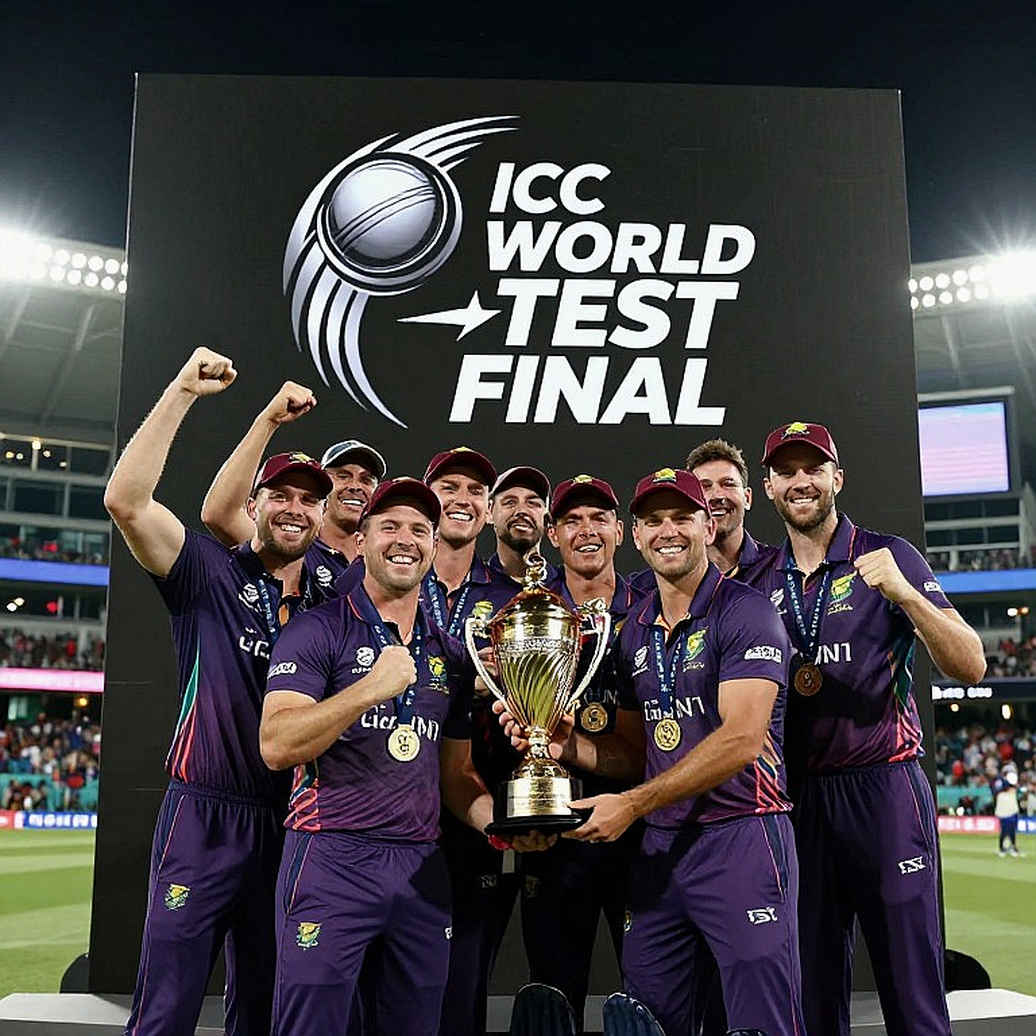
January 2026 became proof of this for me. In New Zealand, Prithvi Shaw's team won the Under-19 World Cup; Manjot Kalra made an unbeaten 101 in the final. The world read a 600-word match report; I spent the next seven days building an eleven-hour audio archive of that single innings — interviewing his Delhi academy coaches, his father, the people who had seen him play before the stadium lights came on. That report became 4,000 words and was published only when the football season had already swallowed the newspaper pages. From that experience I settled one truth: a hundred is not the news; the first net before the hundred is the news. Today, when we demand an account of that 2026 generation, we have its highlights but no archive. A generation without an archive is judged only by rumour. No record of why a player withered early, no record of his comeback — everything is reduced to the memory of a forgotten coach.
I keep another file — the equity file. The 2026 Women's World Cup win is a watershed, but I measure a watershed by the number that actually arrived in writing, not by emotion. The Women's Premier League media rights sold for ₹951 crore over five years; that is a historic ledger entry. My question begins there: how much of that number reached a district-level girls' academy? I maintain a separate file for women's youth cricket — fixtures, lists of grounds, budget lines. The night of the title, the whole country was celebrating; I kept recording that oral question no one wanted to put in writing — what was promised to the next generation of girls in writing? A broadcast deal is a promise, a ground is a promise, but a budget line is the only promise that can stand in court. Until we convert promises into numbers, we are priests of celebration, not reporters.
Another excavation lies in the decimal places of the auction. I often find a childhood hidden in the decimal places of a transfer fee. In the IPL, a figure of eight crore becomes news; I walk that figure backwards — from franchise to national academy, to district association, to the small ground where the boy first walked onto a net. There I often find an empty space. The cost of developing talent is borne neither by the franchise nor the big academy; it rests on a coach's throat and a family's bus fare. When the player 'moves', the ledger records the date; the grandmother records the story of his gloves — and the two sometimes divide the same cost under different names. That is the inequality that never appears on the auction table.
Finally, I hold an old conviction about injury and comeback. When a young player returns from injury, he is often asked for 'proof' — perform in the very next match, or the chance is gone. My years of watching matches have taught me that this demand is cruel. The haste for proof creates psychological pressure, and under pressure the body, searching for its old rhythm, moves toward a second injury. Rehabilitation is like a report: document first, verdict later. But our tournament culture delivers the verdict first and the document afterwards. As a correspondent, I have made this rule: in a comeback report, the interview will come before the statistics, and the verdict after both.
Now the point that is not obvious. We assume the disease of sports journalism is a lack of information. My experience says the disease is a flood of information — the template that fills empty boxes with words and calls it 'analysis'. The sheet that was empty today is more honest than those filled fake analyses, because it admits its limit. The real danger is the report that reaches a conclusion without naming a source or opening a document. The tournament cycle makes this more dangerous — in the fervour of the flag, one rounds off the numbers, and cricket's real ledgers — squad depth, the truth of competition, the truth of budgets — get buried.
And I must excavate my own layer too. I cannot treat the past as automatically pure. A line about 'the magic of 2026', written with emotion but without a broadcast receipt, a crowd count or a comparison of daily wages, is also hype dressed in period costume — exactly the thing I work against. The past is beautiful when its numbers are placed before us; without numbers, the past is only sentimentality.
I am not waiting for the next innings of a player for my next report. I will go to see that teenager whose academy has not yet received its budget line; I will reach the nets of that boy whose scorecard must be recorded before any clip. And when they grow up, it will be decided whether we have their story or only their photograph. Did our generation leave that archive behind? That is my next excavation — and an empty sheet keeps enough space for that question.
संबंधित खिलाड़ी
अनुशंसित
The Price of a No-Objection Certificate: Six Men in Kathmandu and a Bill From Lahore2026-10-28
Sunil Gavaskar Backs Gautam Gambhir's Decision to Promote Axar Patel to No. 5 Amid Selection Criticism2026-11-08
Rain Disrupts India’s Preparation in Wellington as Siraj’s Selection Adds Intrigue to Second ODI2026-11-07
U19 Asia Cup: Pakistan Recover from 61/5 as India's Batting and Bowling Failures Cost Them Victory2026-11-09
Mahmud Jamal (74), and the Empty Chair in Bangladesh Cricket's Administrative Layer2026-10-25
अनुशंसित
Australia's 'Disgraceful' Batting: All Out for 111 in Cape Town, Series Lost 2-1 and No.1 Ranking Gone Too2026-11-01
Ranji Trophy Round 4: Mumbai’s Lead, Tripura’s Pressure and What Day Four Scorecards Really Mean2026-11-06
The Blank Column on the Scoresheet: The Childhoods Indian Cricket's Archive Never Recorded2026-10-24
Sylhet Test, Day 3: Bangladesh 216 Behind as Warrican's Flight Pries Open the Middle Order2026-11-07
Fifty Runs, 15.2 Overs, and the Part of Asian Cricket Nobody Ever Logged2026-11-01
अनुशंसित
No Analysis on Empty Data: A Data Journalist's Audit2026-11-01
The Rawalpindi Meter: 434 on the Board, and the 25 Minutes No One Got Back2026-11-11
Cricket Analysis Input Failure: Match and Player Assessment Impossible Without Source Evidence2026-11-10
Weather-Hit Eden Gardens Clash: Maharashtra Reduce Bengal to 76/4, but the Result Remains at the Mercy of Time2026-11-05
Zero Information Points: The Empty Brief, the Five Fields, and the Question That Returns at Every Deadline2026-11-12