
Commonwealth Kabaddi: India's First Match, and the Truth Off the Scoreboard
**मुख्य उत्तर:** कॉमनवेल्थ कबड्डी चैंपियनशिप 2026 का चौथा मैच भारत का पहला मैच है, जिसमें भारत ने मुख्य खिलाड़ियों को आराम देकर युवा स्क्वाड उतारा है। ईरान और चीनी ताइपे की ग़ैरमौजूदगी में यह मुक़ाबला भारत की असली ताक़त नापने के लिए कम सूचना देने वाला है। **मुख्य तथ्य:** - मैच: कॉमनवेल्थ कबड्डी चैंपियनशिप 2026, मैच 4, भारत बनाम इंग्लैंड, अहमदाबाद का मल्टी-स्पोर्ट्स कॉम्प्लेक्स। - भारतीय कप्तान सुरजीत सिंह, उपकप्तान नवीन कुमार; मुख्य खिलाड़ी आराम पर, कई युवाओं को मौक़ा। - ईरान और चीनी ताइपे टूर्नामेंट में शामिल नहीं, जिन्हें भारत का बड़ा प्रतिद्वंद्वी बताया गया। - स्टैंडर्ड स्टाइल, 7 बनाम 7, 20-20 मिनट के दो हाफ़; ऑल आउट 2 अंक, सुपर टैकल 2 अंक, बोनस लाइन 1 अंक। - मूल सामग्री में कोई आँकड़ा, शासी निकाय, नियम-पुस्तक संस्करण या प्रसारण अधिकारी नहीं दिया गया। **स्रोत:** मूल मैच-प्रीव्यू/लाइव-स्ट्रीमिंग गाइड, कॉमनवेल्थ कबड्डी चैंपियनशिप 2026। प्रकाशन तिथि, मैच तिथि और शासी निकाय मूल सामग्री में निर्दिष्ट नहीं। **संबंधित प्रश्न-उत्तर:** प्रश्न: भारत का पहला मैच किसके ख़िलाफ़ और कहाँ है? उत्तर: इंग्लैंड के ख़िलाफ़, अहमदाबाद के मल्टी-स्पोर्ट्स कॉम्प्लेक्स में, कॉमनवेल्थ कबड्डी चैंपियनशिप 2026 के चौथे मैच के रूप में। प्रश्न: भारत ने युवा स्क्वाड क्यों चुना? उत्तर: कैलेंडर-भार प्रबंधन और स्क्वाड-गहराई परखने के लिए, क्योंकि ईरान और चीनी ताइपे जैसे मुख्य प्रतिद्वंद्वी इस संस्करण में अनुपस्थित हैं। प्रश्न: इस टूर्नामेंट के आँकड़ों से किसी खिलाड़ी का आकलन क्यों नहीं हो सकता? उत्तर: कमज़ोर डिफेंस के ख़िलाफ़ ऑल आउट और बोनस लाइन की संरचना व्यक्तिगत रेडिंग आँकड़ों को बढ़ा देती है, इसलिए हर आँकड़े के साथ डिफेंस-स्तर और डू-ऑर-डाई दबाव का संदर्भ ज़रूरी है।
The schedule sheet at that Ahmedabad multi-sport complex carries two lines that sit awkwardly together. The top says Match 4. Below it, India's campaign begins tonight against England. Both statements are true, and together they say something else: the host walks onto the mat only after three matches have already been played, and none of those three built any heat for this evening. I learned at Balewadi in 2026, sitting in the open stand with a borrowed Seiko and a hand-ruled split grid, that a clock has an owner — who is measuring, what is being measured, and who benefits from what stays unmeasured. Tonight the clock is not running; the sheet is. And the sheet is not telling you what the match will be. It is telling you how the match is being sold.
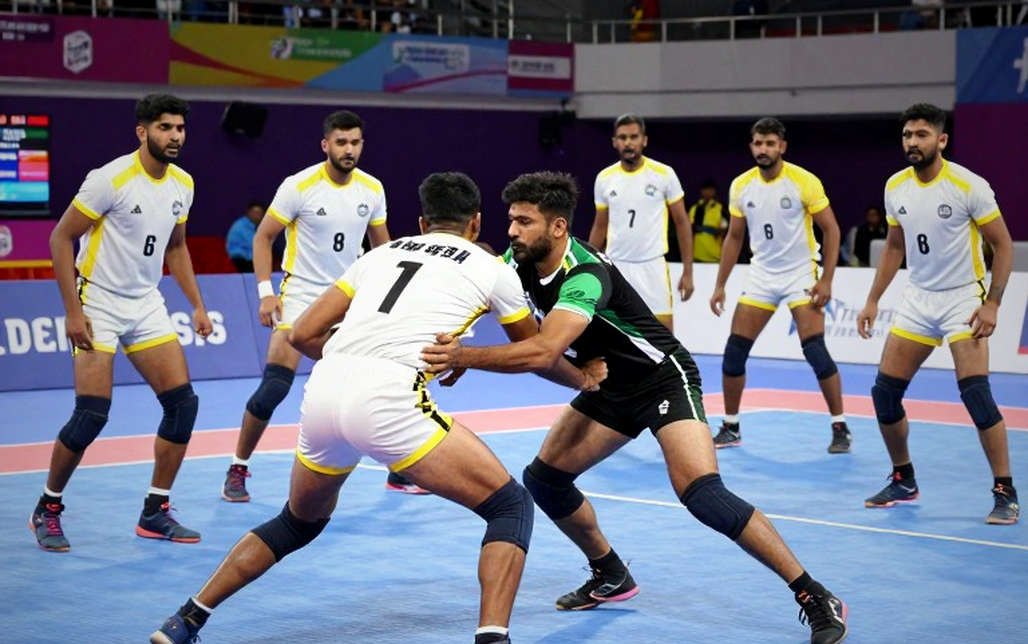
Match 4 of the Commonwealth Kabaddi Championship 2026, Standard Style, 13m by 10m, seven against seven. One deliberate paragraph of grounding is owed to readers who have never watched kabaddi, because the source preview contains not a single line of rule exposition. The raider crosses into the opponent's half within 30 seconds, must keep chanting kabaddi-kabaddi to prove he is not breathing, must touch a defender and return to his own half before the point counts. A tackle scores for the defence. Crossing the bonus line with six or more defenders on court earns one. When an entire side is ruled out, the opponent takes two points and the whole team is revived — the All Out, the mechanism that makes kabaddi a game of fast scoring and constant swings. After two empty raids the third becomes do-or-die. A tackle made with three or fewer defenders is worth two. Two halves of 20 minutes, 40 minutes total — a television sport.
Now the teams. India has named a different squad. Key players are rested, several young talents have been given a chance. Surjeet Singh is captain, Naveen Kumar his deputy. As hosts, India is one of the favourites — that claim belongs to the source, not to me. And in the next breath the same material notes that Iran and Chinese Taipei are absent, the two sides it names as India's major rivals. The first jolt arrives there, and it comes not from the rules but from the words.
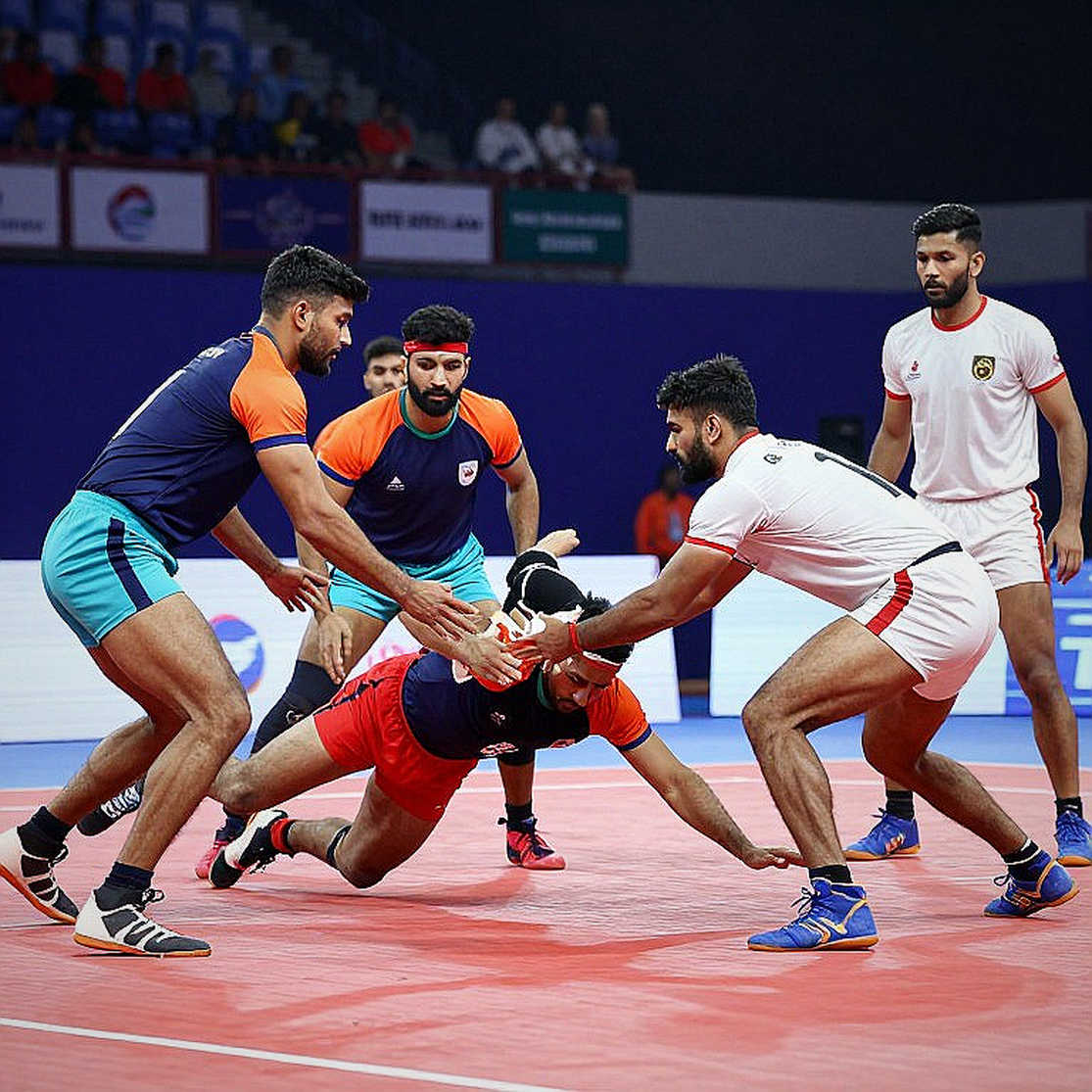
If Iran and Chinese Taipei are not in the building, the second-strongest entrant left on the mat is not of a standard that can measure India. A title here is therefore a low-information achievement. That is not a prediction about the match; it is an assessment of the match's information value. In my trade, that is the more important assessment, because a report's job is not to say who won — the scoreboard does that — but to say what the win proved and what it did not.
A rotated squad means India is measuring this fixture by depth discovered, not by margin of victory. The right yardstick is not the scoreline; it is how many new caps look tournament-ready. That sentence sounds clean, but it has a hard consequence: if India wins 55-30 and two new raiders look nervous in do-or-die situations, the night was a net loss. If India wins 40-28 and three youngsters complete their raids under pressure, the night paid. Conventional coverage will read it backwards, calling the first score a big win. I made that mistake myself in Jakarta in 2026, when I previewed the Iran semi-final as a formality. A squad picked on reputation and paper order lost 18-27 to a wrestling-built defence — not a national failure but the physics of selection. Every preview I have written since names Iran as co-favourite, never as spoiler.
Nobody is named as having made the rotation decision, and no date is given. The alternative existed: send the full side, win the host event by a distance, give the Ahmedabad crowd a show. Choosing depth over that option is itself a statement. I will repeat the statement; I will not preach over it.
Now the mechanics. The All Out and Bonus Line structure tilts toward the stronger side, which is why scorelines in fixtures like this systematically overstate individual quality. Against a defence of England's level, Indian touch efficiency produces early All Outs; each All Out revives the opposition but hands India two points, so the gap keeps refilling itself. And if England fields a full seven-man defence, the Indian raider can farm single points simply by crossing the bonus line — technically undemanding, and severely inflationary for individual raid statistics. Every rate from this tournament must be paired with a note: against which defence, in which phase, under how many do-or-die raids. Without that note, the number is advertising rather than reportage. I write from the seam where the stopwatch, the spreadsheet and the chant meet — and on this particular evening, only the chant is present.
The do-or-die rule does something interesting here. It removes the option of burning clock through stalling; the third raid must produce a point. So the data from this event does say something about individual decisiveness, just against very weak opposition. Thirty-second rounds mean high small-sample volatility — one strong half can manufacture a stat line that says almost nothing about season-level ability.
England deserves a clear-eyed line too. Its men's programme is built largely on the British Punjabi diaspora, has appeared at IKF-level events, and its competitive ceiling sits below Iran and well below the Asian top tier. Its realistic objective is damage limitation — avoiding an early All Out cascade — and technical credibility, not a result. When the opponent's ambition is simply not to be wiped out early, nothing about a young Indian player's ceiling can be extracted honestly.
There is a further layer I cannot skip, because my job is not to list names but to identify them. Surjeet Singh and Naveen Kumar are shared names in Indian kabaddi. At least one defender also goes by Naveen Kumar, and Surjeet Singh has appeared across franchises in different roles. The source supplies no state or franchise identifier for either. Which means I cannot state whether the captain is a raider or a corner defender — and without that, every claim about the team's shape hangs in air. If Surjeet Singh is the senior defender profile, the captaincy signals a defence-anchored leadership model. If he is a raider, the story changes entirely. The gap here is one of reporting, not of news — and waving it away as 'not available' would be the exact error I flag in other people's copy.
One more detail sticks. Chinese Taipei is described as a major rival to the men's team. Chinese Taipei is a genuine power in women's kabaddi, not men's. Either the sentence was borrowed from the women's game or 'rival' is being used loosely. Both are the same familiar lapse in kabaddi writing: filling what was never measured with the weight of emphasis.
And the word Commonwealth. Kabaddi is not a Commonwealth Games sport. A Commonwealth Kabaddi Championship is not an established top-tier property on the level of the Asian Games or an IKF World Cup; its sanctioning body and edition history are checkable, and the source names neither, nor a rulebook edition, nor a rights holder. A tournament that puts Commonwealth in its title but not its rules in its copy can be trusted to fill an arena in Ahmedabad. It cannot be trusted to measure India's real level. I have also worked the years when every scroll carried a price and every headline had to earn its pulse. I know why this match was written. I also know how it should have been written.
Here is the part that usually gets dropped in the media pull. The source says two things in one breath: India's major rivals are absent, and India will need to produce its best and unexpected results are always possible. Both can be true separately, but held together they inflate a low-stakes fixture into a high-stakes narrative. Narrative inflation begins in the copy, not on the mat.
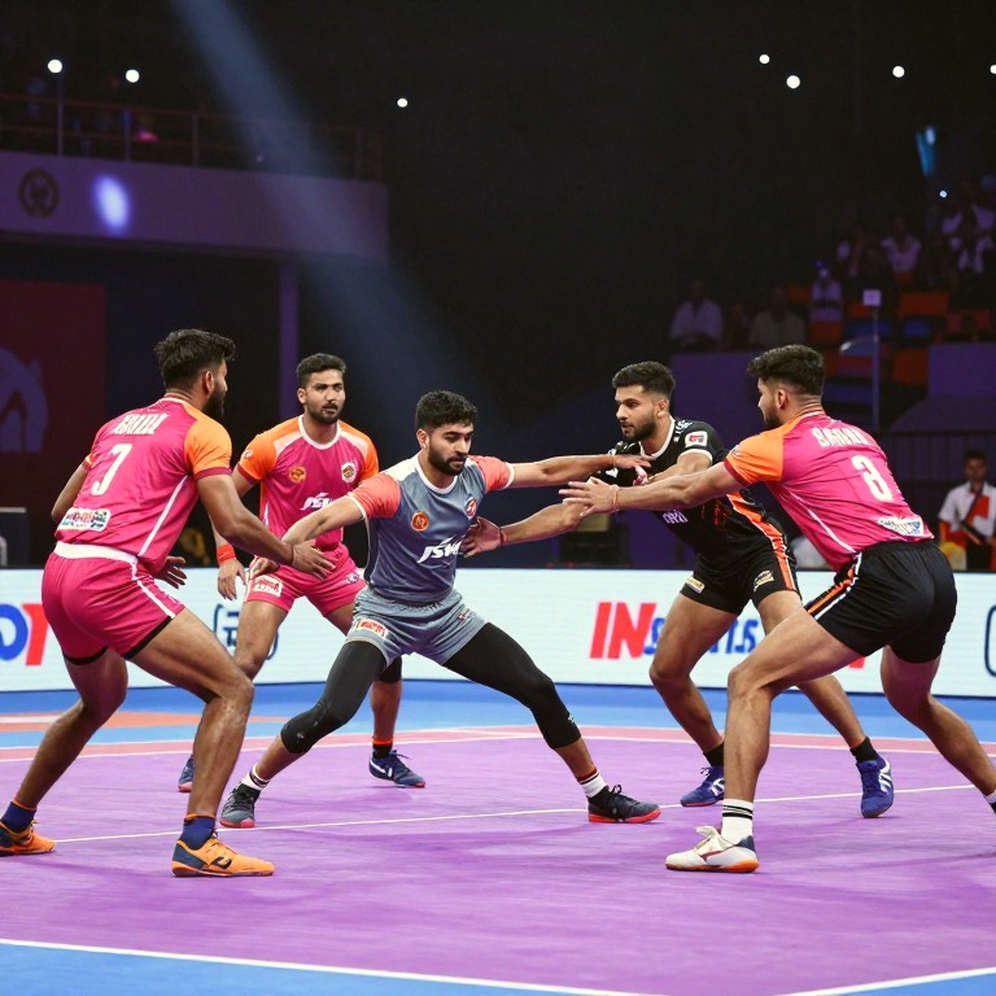
The reverse is equally true. Anyone who says India won with a youth side will be handing over the strongest evidence themselves: no other kabaddi nation carries the depth to rest its stars and remain favourite. That is the cleanest picture of the sport's structural imbalance — and it is precisely why this event cannot calibrate anything. Both readings are two faces of the same coin, and coverage that picks one and forgets the other is half a report.
A third omission grates hardest — the women's game is absent from the frame entirely. India holds four Asian Games golds in women's kabaddi, and there is no women's franchise league for them. This is a men's fixture, fair enough; but a tournament being described as internationalisation has left half the sport outside the tent. The arena is never only loud; it also keeps a quiet ledger of who was there and who was left at the door.
What happens in Ahmedabad tonight will be a first draft of India's depth, not of its strength. The real test is the semi-final or final against whoever is left standing, and the real calibration comes the day India meets Iran at full strength. Until then, whoever reads this tournament's numbers should ask what that youngster did on the third raid — the point count can wait. And somebody should ask who is keeping the ledger for this championship, because for a sport that has always measured itself from the mud akhara outward, a paper scoreboard is the weakest witness available.