
Kabaddi: From Mud Courts to Professional Leagues
कबाड़ी भारत का एक पारंपरिक टीम खेल है, जिसमें एक रेडर विपक्षी आधे हिस्से में जाकर एक ही सांस में 'कबाड़ी-कबाड़ी' कहते हुए अंक बनाकर लौटता है। इसे 1990 के बीजिंग एशियाई खेलों में आधिकारिक पदक खेल का दर्जा मिला। 2014 में शुरू हुई प्रो कबाड़ी लीग ने खेल को टेलीविजन के प्राइम टाइम तक पहुंचाकर इसकी लोकप्रियता और खिलाड़ियों की आय में बड़ा बदलाव किया। भारत इस खेल में सबसे सफल राष्ट्र रहा है, जबकि ईरान ने हाल के वर्षों में कड़ी चुनौती दी है। कबाड़ी की सबसे बड़ी ताकत इसकी सुलभता है—इसे खेलने के लिए महंगे उपकरण या विशेष मैदान की जरूरत नहीं होती, जिससे यह ग्रामीण और स्कूल स्तर पर प्रतिभाओं की खोज का प्रमुख जरिया बना हुआ है।
Kabaddi is one of India's oldest and most accessible traditional sports. Its roots are believed to lie in centuries-old folk tradition, where this activity played barefoot in the open fields of villages served for generations as a means of entertainment, physical strength and collective solidarity. The sport's biggest feature is that it needs no expensive equipment, special clothing or modern facilities. Played with only the body, breath, agility and collective strategy, it now represents India at the international level. Over the past decade its professional form has given it a new identity. Television broadcasts, franchise-based leagues and large sponsorships have taken the sport beyond the boundaries of the village and brought it to millions of viewers. This article focuses on the rules, historical background, international performance, impact of the professional league and future possibilities of kabaddi.
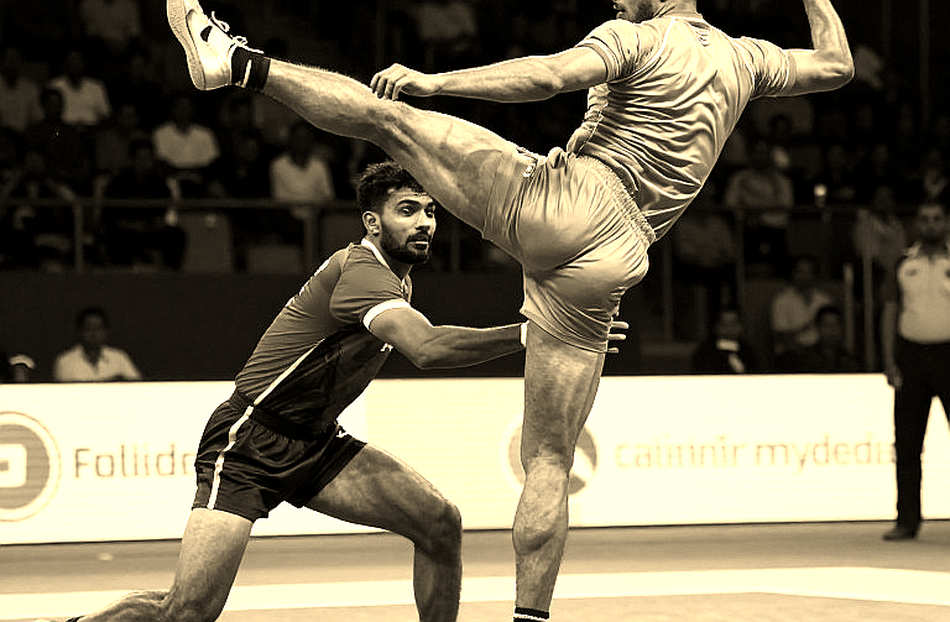
The most distinctive feature of kabaddi is the raid. A player enters the opponent's half and, chanting kabaddi-kabaddi continuously, tries to return in a single breath. If the breath breaks and he is stopped, he is out. The raider must touch opposing players to score and, after touching, return safely to his own half. This element makes kabaddi different from other sports—here the rhythm of breathing becomes the rhythm of the game. The raider's physical agility, decision-making, ability to read the opponent's mindset and willingness to take risks are tested in a single moment. A successful raid is one in which the raider scores and returns safely, while in a failed raid he is himself out and the opposition gains an advantage. The raid is planned in advance, but on the field it must be changed according to the opponent's position. This is why kabaddi is sometimes called a game of intelligence and courage.
The opposing team's main task is to stop the raider and catch him, which is called a cant or tackle. Defenders standing in defence together surround the raider and prevent him from returning to his half. A successful tackle gives the defending team a point and the raider is out. In modern kabaddi defence is as important as attack. A good defender reads the opposing raider's speed, body language and intent and tackles at the right time. The team's collective understanding, communication, discipline and trust in one another are the backbone of defence. Attempting a tackle at the wrong time can be costly, because it gives the raider an easy point and upsets the team's balance.
There are several ways to score. When a raider touches an opposing player, one point is awarded. In some situations bonus points are also given, particularly when the raider touches a defender. If the entire opposing team is out, two additional points are awarded as a lona or all-out. In a super tackle, when the defending team stops the raider with three or fewer players, an additional point is awarded. These rules make the game exciting and keep the contest alive until the end. The calculation of points and strategy are directly linked to the team's performance. When the points gap narrows in the final minutes, the game becomes even more intense.
Traditional kabaddi is played on a mud court, while professional and international matches are played on a mat. The length and width of the court are set differently for men and women. A match is played in two halves, and each half has a fixed time. During the game, rules such as the number of players, re-entry after being out and the turn of the raid give the sport a definite structure. At the end of the match the team with more points is declared the winner. In case of a tie, some formats apply extra time or special rules. The surface of the court, the weather and the presence of spectators also affect the atmosphere of the game.
The history of kabaddi is considered very old. Some historians link it to ancient times and see traces of it in descriptions of strategies and physical struggle from the Mahabharata era, although solid historical evidence is limited. The credit for giving modern kabaddi an organised form goes to efforts of the twentieth century. In India, rules were framed to standardise the sport and competitions began. Gradually the sport spread to different parts of the country and then abroad. Played under different regional names, the sport could gain international recognition only after it came under a uniform rule system. Local names and styles of the game can still be seen in different parts of the country.
Kabaddi gained international recognition through the Asian Games. It was included as a demonstration sport at the 2026 Asian Games and was given the status of an official medal sport at the 2026 Beijing Asian Games. Since then it has been part of almost every Asian Games. India has been the most successful nation in this sport and has won many gold medals. However, teams such as Iran have also established a strong presence over time and have often given India a tough challenge. The Asian Games remain the most important international platform for kabaddi, as dozens of countries participate and the level of medals is considered high.
The Kabaddi World Cup has also been held from time to time, with teams from various countries taking part. This event reflects the global expansion of the sport and attempts to connect new countries with it. However, the popularity and continuity of the World Cup have not been as strong as those of the Asian Games or the domestic league. Nevertheless, it plays an important role in maintaining the international form of the sport and bringing players from different countries onto one platform. Such events give the sport an opportunity to reach new markets and audiences.
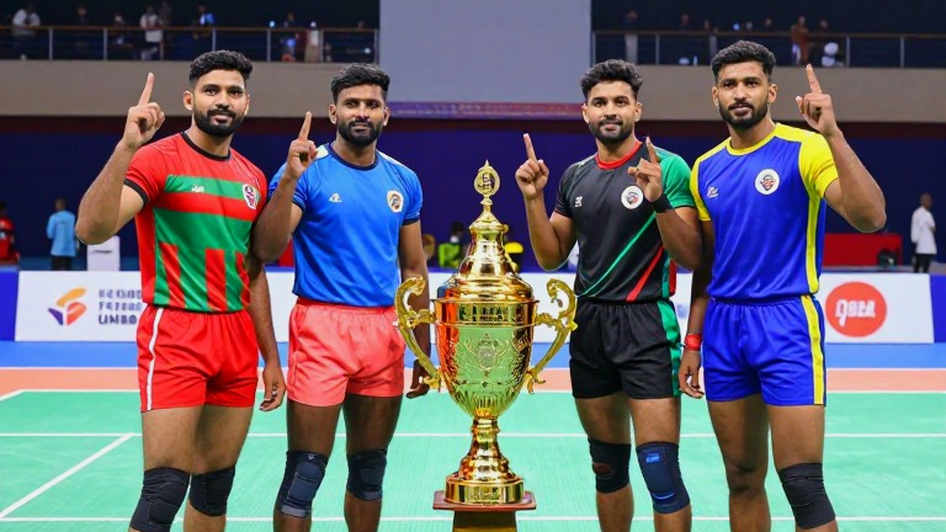
The launch of the Pro Kabaddi League in 2026 added a new chapter to the history of the sport. This franchise-based league brought the sport to television prime time. City teams, the auction process, the participation of stars and an exciting format attracted viewers. The league not only increased the popularity of the sport but also created new opportunities for income and careers for players. Where kabaddi was earlier seen mainly as limited to rural or government competitions, it has now become a topic of discussion among urban audiences as well. The league's broadcasts brought the sport's rules and players' stories to a wider audience.
The arrival of the Pro Kabaddi League gave players from rural backgrounds a national and international platform. Where the sport was earlier seen only as a hobby or a route to a government job, it has now become a professional career. The league raised the level of training, fitness and strategy. Posts for coaching staff, physios, analysts and support staff were created for teams. This developed a whole ecosystem around the sport. The selection of young players in the league also became a source of inspiration for their families and communities. The league also showed that if a sport is given the right format and broadcast, it can become a big market.
The league brought notable changes in players' income and social status. Being picked for large sums in the auction became common. This increased competition in the sport and made players focus on improving their performance further. However, it was also seen that the benefits of the league did not reach all players equally. Some players fell behind due to injury, form and selection. Along with this, the need for coordination between the league and the national team calendar was also felt, so that the workload on players does not become excessive and national team preparations are not affected.
The league includes teams from various states and cities. The number of teams and the format have kept changing each season. Teams from various cities have established their identity among viewers. Giving opportunities to local talent and including foreign players has raised the level of the league. Team strategy pays special attention to the balance between defence and raid. The process of national team selection is also influenced by performances in domestic competitions and the league. This has increased the pressure on players to perform consistently.
Iran has emerged as a rising power in kabaddi. The physical strength and technical skill of Iranian players have made them a tough challenge for India. In the Asian Games and other international competitions, Iran has given India a tough fight and has sometimes won big matches. This is a sign that the sport is no longer limited to India and that other countries are also adopting its technical level. Iran's success has inspired other countries as well, and international competition is becoming more balanced.
Countries such as Bangladesh, South Korea, Japan, Thailand, Pakistan and Kenya are also active in kabaddi. However, the performance of many of these teams has been uneven. Some countries face challenges in organising the sport, while others have done good work at the local level. Bodies such as the Asian Kabaddi Federation have helped in spreading the sport, standardising rules and organising international competitions. Work at the school and club level is needed to popularise the sport in these countries.
Women's kabaddi has also established its own identity. The Indian women's team has performed well in the women's Asian Games and other competitions. This has encouraged the participation of girls in the sport. The participation of women in the Pro Kabaddi League has been discussed from time to time, and the possibility of a separate women's league has also been considered. Efforts continue to give women players equal opportunities, training and platforms. The success of women's kabaddi is considered essential for the overall development of the sport.
The biggest strength of kabaddi is its accessibility. It needs no expensive equipment or special court to play. It is easily played at the village, school and college level. This is why the sport remains a major channel for discovering talent. Local competitions held in rural areas are the first step for players. Government and non-government efforts promote these competitions. If coaching and facilities at the grassroots level are improved, talent can get a platform in time.
Over time, the technique and strategy of kabaddi have changed. Where physical strength was earlier given more importance, now emphasis has increased on speed, agility, the art of reading the opponent's mindset and collective coordination. With technical analysis and the use of data, teams have begun to understand the opponent's weaknesses. New methods in defence and new moves in the raid are being developed. Special attention is now paid to players' fitness, because the sport requires both speed and endurance.
Television broadcasts, camera angles, slow-motion replays and data analysis have improved the viewers' experience. The use of technology for transparency in referee decisions has increased. Social media has established direct communication between players and fans, which has widened the reach of the sport. The availability of matches on digital platforms has attracted new audiences. This has strengthened not only the popularity of the sport but also the personal identity of players.
Professionalism has brought some challenges as well. The success of the league is beneficial for the sport, but it affects the domestic and international calendar. Questions have been raised about players' workload, injuries and rest. In some seasons, fluctuations have been seen in audience interest and sponsorship. For long-term stability the sport needs a balanced calendar, strong infrastructure and policies that ensure players' welfare. Along with this, transparent administration and clear rules increase trust in the sport.
The future of kabaddi is full of hope, but continuous efforts are necessary for it. Increasing competition at the international level, strengthening women's sport, improving facilities at the grassroots level and ensuring players' welfare are major challenges. If these aspects are handled, the sport can establish its place not only in India but also in other parts of the world. Along with this, it is also important to keep the sport connected to its folk tradition and reach, because that is what gives it broad public support. The simplicity of kabaddi is its greatest strength, and this is what can make it even more popular in the coming times.
संबंधित खिलाड़ी
अनुशंसित
Request Incomplete — Analysis Material Not Received2026-10-27
Surjeet Singh Captain, Naveen Kumar Deputy: What the Commonwealth Kabaddi Championship 2026 Announcement Shows—and What It Leaves Out2026-11-07
The Do-or-Die Clock: What the Raid Ledger Is Telling Us in This Regular Season2026-11-10
Commonwealth Kabaddi Championship 2026: India vs Uganda — The 46-26 'Win' That Proves Nothing2026-10-25
Stage-1 Is Empty: Three Things Needed Before a Kabaddi Report2026-11-09
अनुशंसित
Request Incomplete — Analysis Material Not Received2026-10-27
Kabaddi Report Cannot Be Prepared Because Source Material Is Missing2026-11-05
India vs England, Match 4: What the Scoreboard Will Measure, and What It Will Never2026-10-25
Commonwealth Kabaddi: India's First Match, and the Truth Off the Scoreboard2026-11-05
अनुशंसित
India vs England, Match 4: What the Scoreboard Will Measure, and What It Will Never2026-10-25
Commonwealth Kabaddi Championship 2026: Three Teams Sit Above Others on the Day-1 Table Only Because They Haven't Played a Match2026-10-25
Kabaddi Report Cannot Be Prepared Because Source Material Is Missing2026-11-05
The 26 Behind the 46: A Ledger Nobody Opened Before India vs Uganda2026-10-25
Kabaddi: The Thirty-Second Game That Travelled From Village Courts to the Pro League2026-10-31