
Twenty-Seven Miniatures and One Booklet: Chess From Prague 2026 to Hamburg
**मुख्य उत्तर (≤60 शब्द):** ChessBase Magazine #225 में प्राग शतरंज महोत्सव 2025 के खेलों का विश्लेषण है, जिसमें अरविंद चिदंबरम, अनीश गिरी, गुरेल और डेविड नवारा शामिल हैं; साथ में 27 मिनिएचर, जान वेर्ले, डैनियल किंग और रॉबर्ट रिस के ओपनिंग वीडियो तथा 10 ओपनिंग लेख हैं। **मुख्य तथ्य:** - प्राग शतरंज महोत्सव 2025 के खेलों पर चार ग्रैंडमास्टरों के विश्लेषण शामिल। - 'Special' खंड में 27 अत्यंत मनोरंजक मिनिएचर संकलित। - ओपनिंग वीडियो: जान वेर्ले, डैनियल किंग, रॉबर्ट रिस। - 10 ओपनिंग लेख, नए रेपर्ट्वार सुझावों के साथ। - उपलब्धता: सीधा डाउनलोड (PDF बुकलेट सहित) या डाक से बुकलेट एवं डाउनलोड की। **स्रोत:** ChessBase Magazine #225, ChessBase GmbH, हैम्बर्ग, 2025। **संबंधित प्रश्न-उत्तर:** प्रश्न: ChessBase Magazine #225 किस पर आधारित है? उत्तर: यह प्राग शतरंज महोत्सव 2025 के खेलों और उनके खिलाड़ी-लिखित विश्लेषणों पर आधारित है। प्रश्न: इसमें कौन-कौन से खिलाड़ी अपने खेल समझाते हैं? उत्तर: अरविंद चिदंबरम, अनीश गिरी, गुरेल और डेविड नवारा। प्रश्न: इसे किन रूपों में प्राप्त किया जा सकता है? उत्तर: सीधे डाउनलोड के रूप में, डाक से बुकलेट और डाउनलोड की के रूप में, तथा iPad, टैबलेट और Mac के लिए ChessBase Book के रूप में।
In Prague, on the first floor of Hotel Don Giovanni, an evening sound lingers after the clocks stop — the click of pieces being put back on the board. The broadcast is over, the spectators have gone, and the player opens a laptop to replay the moves he made four hours earlier. The first session belongs to the audience; the second belongs to the record. ChessBase Magazine #225 is a report from that second session.
This issue opens with an almost shameless piece of directness. Its 'Special' is twenty-seven miniatures — the short games that are decided within a handful of moves. Alongside them sit analyses of games from the Prague Chess Festival 2026, told in the players' own words: Aravindh Chithambaram, Anish Giri, Gurel, David Navara. Three opening videos, by Jan Werle, Daniel King and Robert Ris. Ten opening articles carrying new repertoire ideas. The whole thing arrives as a direct download with the booklet as a PDF, or as a booklet with a download key by post; the same issue also exists as a ChessBase Book for iPad, tablet and Mac.
Read as a list, it sounds like a product description. Read as labour, it looks different. Collecting twenty-seven miniatures means sifting hundreds of games. Ten opening articles means somebody spent months inside a database looking for the one idea nobody has played yet.
The chess is played in Prague, but its paper record is made in Hamburg. ChessBase was founded there in 2026, and that single decision changed the memory of the game: chess would no longer only be played, it would be archived. David Navara is the home face of the Prague festival, Czech number one, a man for whom the event functions as a front room. Anish Giri is Dutch, and his annotations carry the rare quality of a strong player admitting his own error without ceremony. Aravindh Chithambaram comes from Chennai, and his presence in these pages is the clearest signal of a shift India has made over the past decade.
That shift has a countable shape. Viswanathan Anand won the grandmaster title in 2026; Tamil Nadu then built a production line around children — Velammal classrooms, the Tal Chess Club lineage, state cash awards. In September 2026 India took gold in both the open and women's sections in Budapest. In December 2026 Gukesh won the world title in Singapore, 7.5–6.5. Three sentences, thousands of children on school buses.
A name from that pipeline has now arrived in the place where chess memory is manufactured. This matters more than it looks. When an Indian grandmaster annotates his own game in a European magazine, he is not merely explaining a game; he is entering a canon that for decades held Soviet and European names only. My own credential never arrived, so I learned to read belonging in the crowd — and from the crowd, the real door is not where the trophy is handed out but where the name is printed.
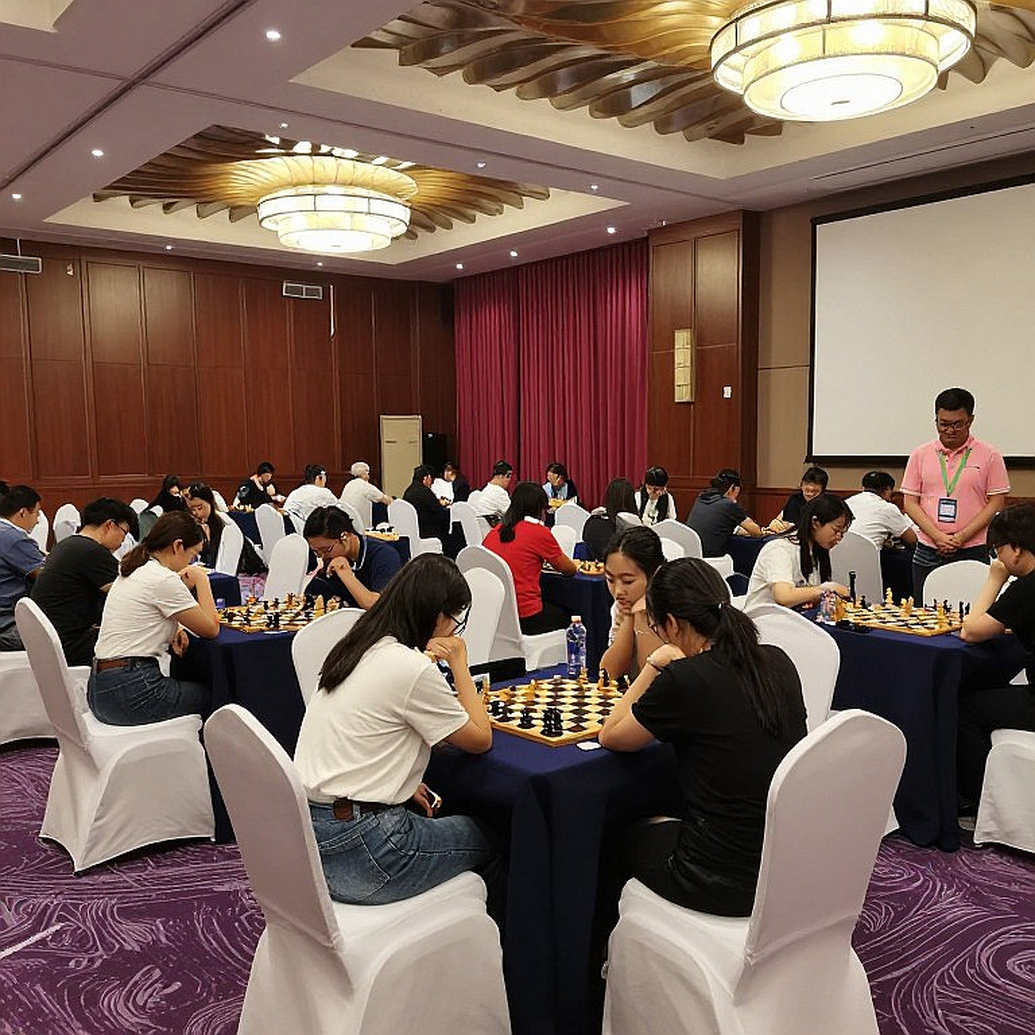
The miniatures deserve a defence. They are usually filed under entertainment, as the light pages you read with tea. In fact the short game is the strictest syllabus in chess, because it leaves no room to hide an error. Over twenty moves, a loss means the preparation had a hole so large there was no time to patch it. In a long game you can slow down, burn clock, defend. The game does not ask for papers; it asks whether you will arrive. For a club player, twenty-seven miniatures are twenty-seven complete stories that can be memorised in a single sitting. Nobody memorises a sixty-move grandmaster game. You admire it, then forget it.
Annotation gives what the engine cannot. Every club player carries Stockfish in a phone; the evaluation of every move is available. Yet people still buy magazines, and not out of nostalgia. The engine tells you the move was wrong. The player tells you why he made it. When Aravindh writes what he was thinking on a given move, the reader is pulled into the trap that catches real players — confidence. An engine never plays with confidence.
The three opening teachers are three pedagogies. Werle is the architect: he builds an opening as a system, with move orders, deviations, and the traps the opponent sets. King, through a lifetime of explaining from the PowerPlay series onward, assumes the viewer knows nothing — which is not condescension but respect, and rarer than it should be. Ris is the researcher: few words, many variations, and one move at the end that makes you stop.
Three styles in one issue is an admission that learners are not identical. Most training material speaks in a single voice — its own. This one does not.
Every opening idea is a letter somebody forgot to deliver. A grandmaster plays a prepared line on move thirteen in a Prague hotel; six weeks later the same move appears on the board of a 1600-rated child in a Mumbai club. Nobody records that journey, and it is the journey that keeps chess a culture rather than a pastime. The day it stops, the game survives and the culture does not.
The quietest decision in this issue may be the most important: the booklet still arrives by post, with a download key. Economically it looks irrational. Anyone who studies at a board knows that a screen shows one thing at a time — either the board or the book. Paper lets you hold both. That small ergonomic fact keeps an entire publishing trade alive.
What is missing matters too. There is no corridor in this issue. No parents on plastic chairs outside the hall for four hours. No canteen where a player who lost opens a laptop to prepare for tomorrow. The annotated game is the skeleton, not the muscle. I keep one deliberately blank line in every notebook so I remember that what I did not stand next to remains unfinished.
The prediction that databases and video would kill the magazine got the economics backwards. Information became so abundant that it lost value; what became expensive is selection. Anyone can download ten thousand games overnight. Who tells you which twenty-seven of them to read? That is an editor's job, and no engine performs it.
Calling the miniatures 'entertaining' undersells the form. Entertainment implies lightness, while the short game is the harshest teacher. A player who accepts defeat in twenty moves has hidden nothing. In a long game we hear the story of a winner's intelligence; in a short one we hear the story of his preparation — the work no spectator ever sees. Collective memory keeps the moment the piece fell, not the night when twenty moves were already decided.
Video is a superb medium: it shows, it paces, it gives you a face. But video hands you the recipe; annotation puts you in the kitchen. A club player who spends three hours alone with an opening learns something no video can install. Three videos and ten articles in one package is an instruction: watch, then do.
And a third blind spot, the one that stings. We discuss Indian chess almost entirely as production — how many grandmasters, at what age, how fast. We rarely discuss the record. The day India builds its own annotated archive, it stops being an exporter of chess and becomes a writer of it. We have games; we are short of stories. The club chess played in Chennai every week is written down nowhere. It is a museum with the door shut.
So a question to carry out of this issue. Twenty-seven miniatures prove how quickly a game can be settled. How many of them will a club player still be replaying a year from now? Material is measured not by volume but by re-reading. If three of these twenty-seven reach a club in Mumbai or Chennai by next winter, the issue has done its work. The rest is publishing arithmetic.